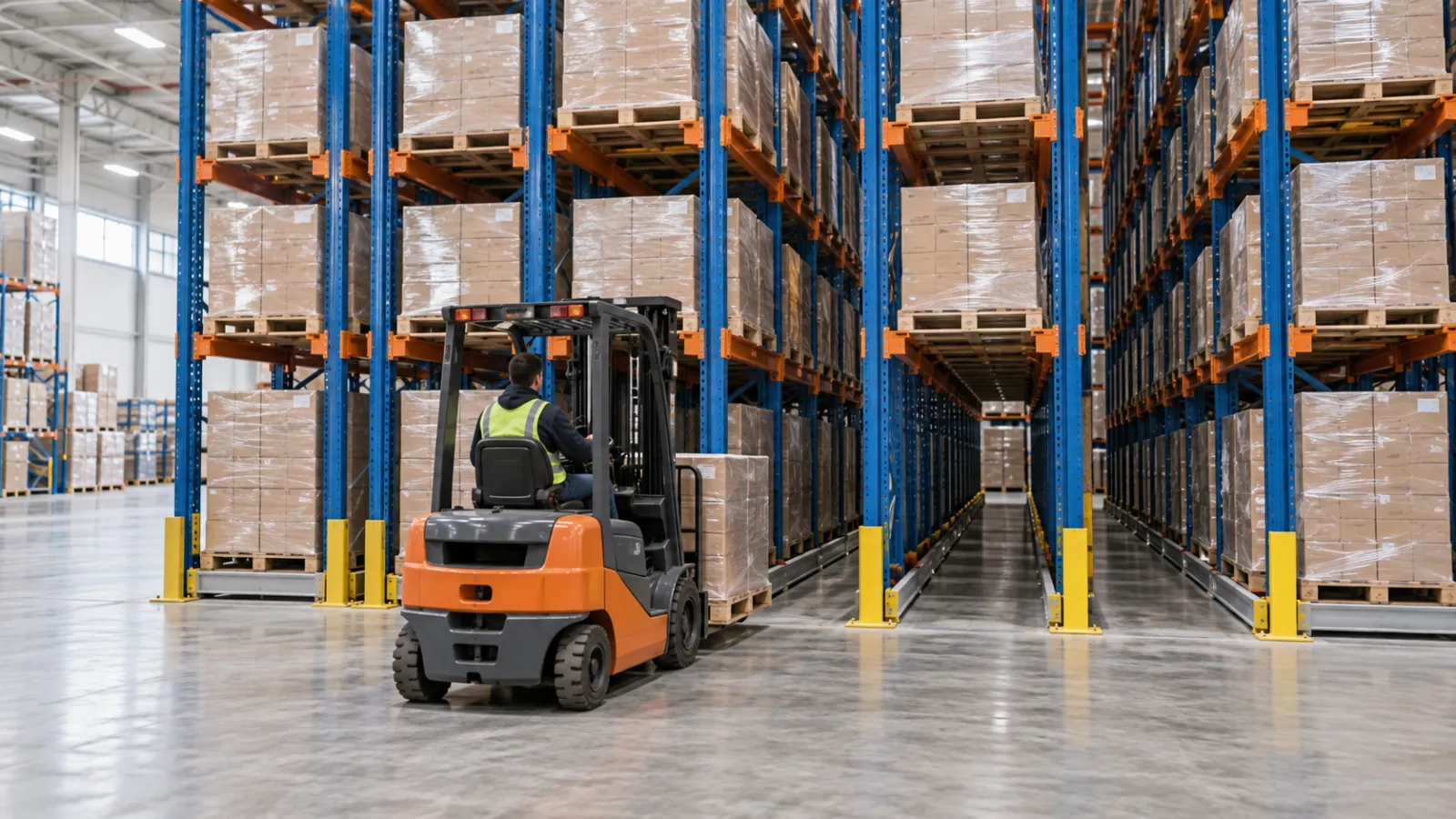
Drive-in and drive-through pallet racking are two of the most effective systems for high-density storage. Both use continuous rack lanes that let forklifts drive directly into the structure to load and unload pallets, and both can significantly increase usable storage capacity compared to standard racking. Choosing between them comes down to your industry, your products, and how your inventory needs to move.
How Each System Works
Both systems look similar at a glance, upright frames, rails that support the pallets, and guide rails to help forklift operators place loads accurately, but the key difference is access.
Drive-in racking is loaded and unloaded from one side only. It typically includes a back stop or safety backing to keep pallets from being pushed out the rear of the lane, and it operates on a last-in, first-out basis.
Drive-through racking is open on both ends, so pallets can be loaded from one side and unloaded from the other. This supports first-in, first-out rotation and requires horizontal supports on both aisles to keep the structure stable.
Where Drive-In Racking Works Best
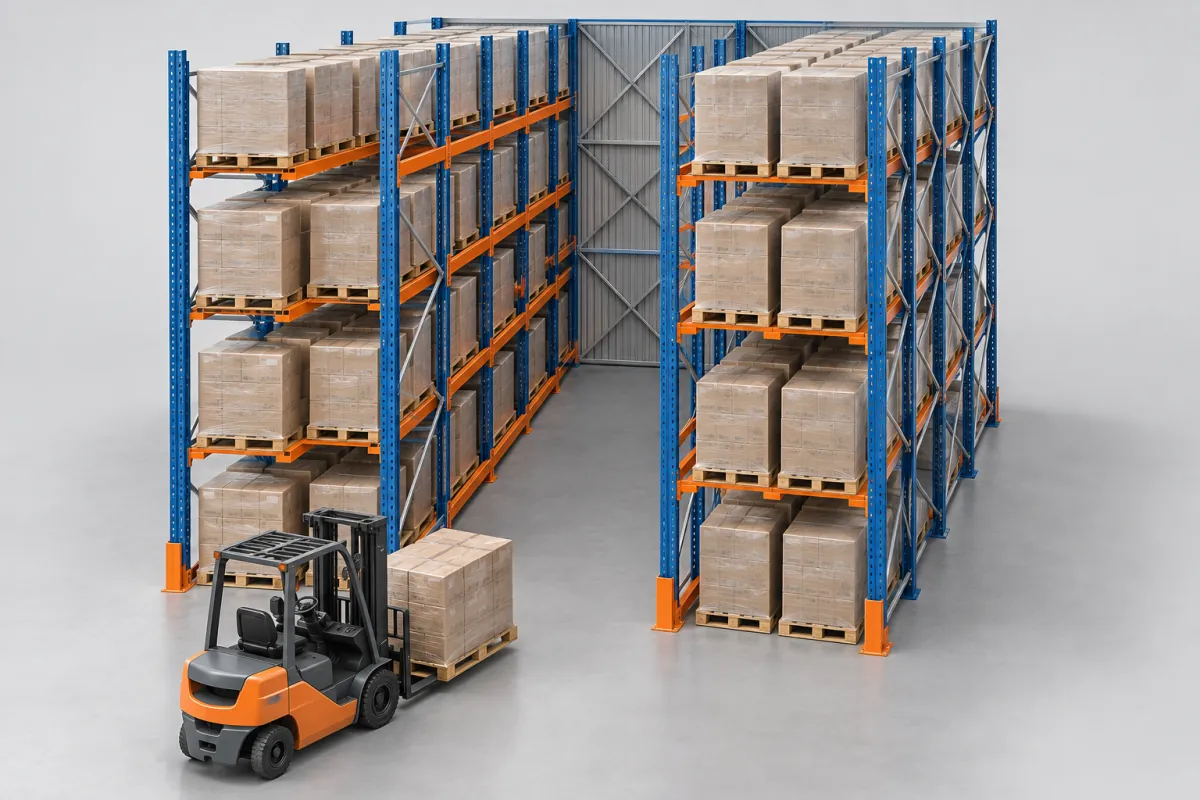
Drive-in systems are built for high-density storage where product rotation isn’t a top priority. Industries that typically benefit include cold storage facilities, manufacturing, retail storage and shipping, food and beverage distribution, bulk pharmaceutical storage, automotive, and general distribution centers.
Where Drive-Through Racking Works Best
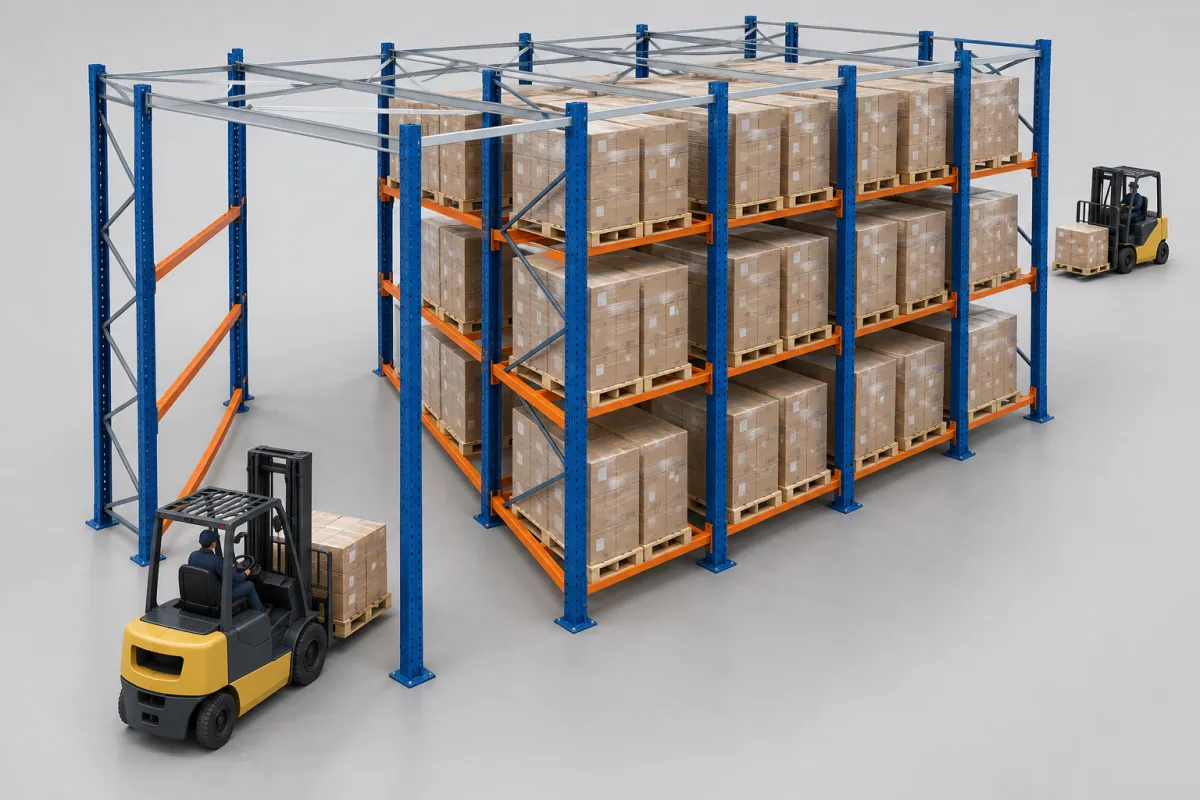
Drive-through systems make the most sense when inventory needs to rotate on a first-in, first-out basis, especially for products that are perishable or lose value over time. Common use cases include seasonal inventory, manufacturing plants, cold storage, food and beverage, and chemicals that must follow FIFO handling rules.
Cost Considerations
Drive-in systems are generally the more budget-friendly option, since they require fewer structural components than drive-through racking. Drive-through systems cost more upfront because of the added supports needed for two-sided access, but for operations that depend on strict FIFO rotation, the efficiency gain can outweigh the difference over time. Final pricing depends on material, system height, depth, and overall complexity, so it’s worth getting a layout-specific quote rather than budgeting off a generic number.
If your inventory doesn’t require this level of density, it’s also worth comparing both options against selective pallet racking, which trades some storage density for direct access to every pallet.
Shared Benefits of Both Systems
Whichever option fits your operation, both drive-in and drive-through racking deliver real advantages.
Stock management. Both systems help keep inventory organized and support proper rotation, which protects against the product loss that comes from skipping first-in, first-out handling. The right system can extend the life of your storage setup and improve inventory turnover.
Product access. Drive-through racking in particular gives forklift operators fast, consistent access to pallets, which matters most for perishable goods, pharmaceuticals, and raw materials that need to move quickly.
Warehouse safety. Both systems create clear, defined aisles and reduce loose product on the floor, which lowers the risk of trip hazards and falling inventory. A well-maintained racking system makes for a safer facility and a better working environment.
Choosing Between the Two
Start with how your inventory actually moves. If rotation isn’t critical and you need maximum density in a fixed footprint, drive-in is usually the better fit. If your product is perishable, date-sensitive, or subject to FIFO requirements, drive-through is worth the added cost. From there, factor in your budget, ceiling height, and forklift equipment before finalizing a design.
Built by Rocky Mountain Warehouse Solutions
Rocky Mountain Warehouse Solutions designs and installs both drive-in and drive-through pallet racking systems for businesses across the Mountain West. Our ANSI/RMI certified team can walk your facility, evaluate your inventory and workflow, and recommend the system that actually fits how you operate, not just what’s in stock.
Get a free warehouse layout consultation or contact our team to find the right racking system for your warehouse.
Related reading: Pallet Racking Buyer’s Guide: Choosing a System That Fits Your Inventory
Frequently Asked Questions
What’s the main difference between drive-in and drive-through pallet racking? Drive-in racking is accessed from one side only and works on a last-in, first-out basis. Drive-through racking is open on both ends, supporting first-in, first-out rotation.
Which is cheaper, drive-in or drive-through racking? Drive-in racking is generally less expensive because it requires fewer structural components. Drive-through systems cost more due to the additional supports needed for two-sided access, though the exact cost depends on height, depth, and material.
Is drive-in or drive-through racking better for perishable goods? Drive-through racking is usually the better choice for perishable or date-sensitive inventory, since it supports first-in, first-out rotation. Drive-in racking is better suited to bulk storage where rotation isn’t a priority.
Can Rocky Mountain Warehouse Solutions help decide between drive-in and drive-through racking? Yes. Our team evaluates your inventory type, turnover needs, and warehouse layout to recommend whichever system, or combination of systems, fits your operation best.