The short answer
Choose shelving by three things, in this order: what places the load (a person or a machine), the heaviest load one shelf will actually carry, and the environment the system lives in. Shelf dimensions come last. Two units that look identical in a catalog can differ by a factor of five in capacity per shelf, and the difference only becomes visible when a beam deflects or a connection corrodes.
If a forklift places the load, stop here — you want pallet racking, not shelving. Everything below assumes hand-loaded or cart-loaded storage.
The four structural families
Industrial shelving is not one product. It divides into structurally distinct families, and the right one follows from load and handling rather than preference.
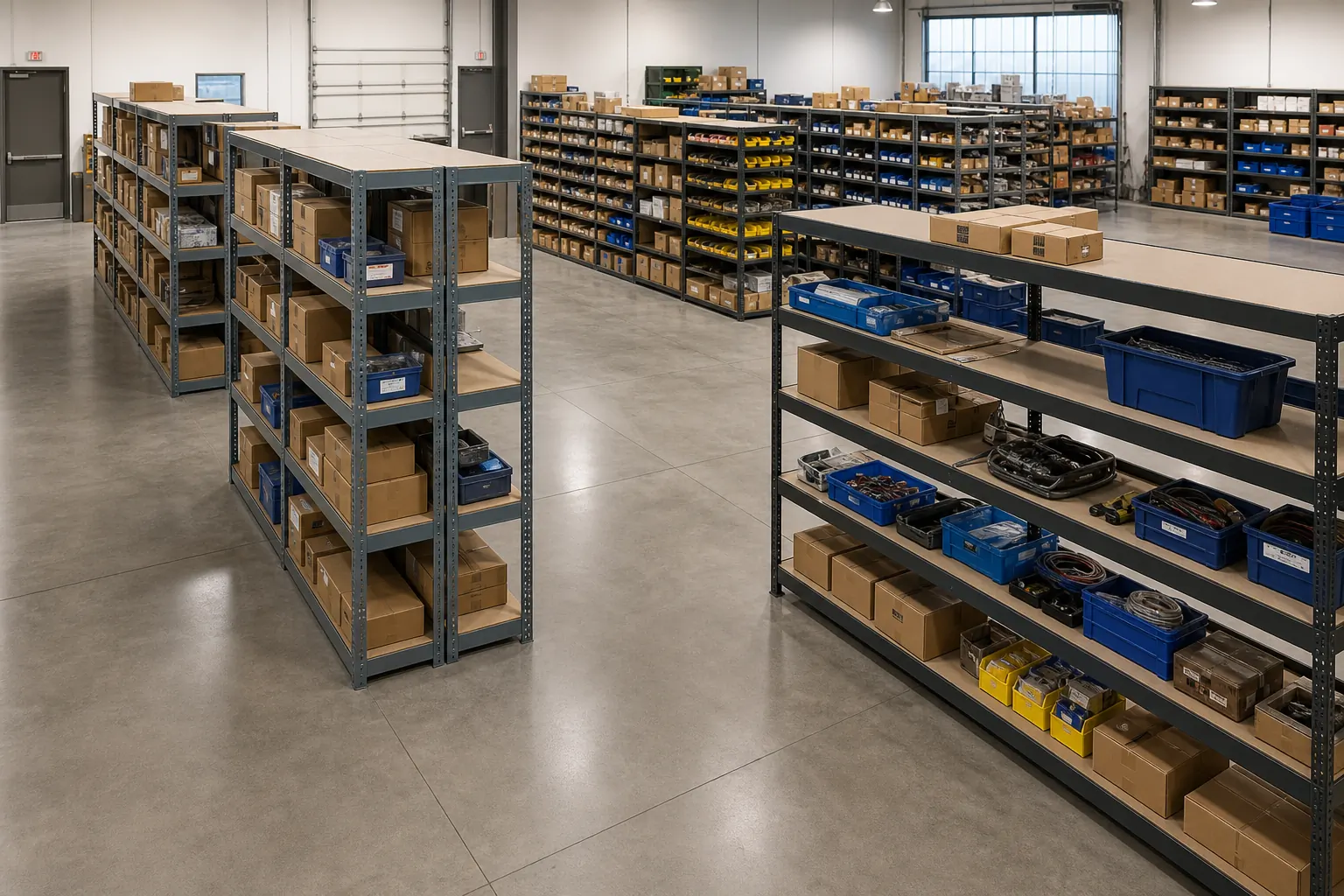
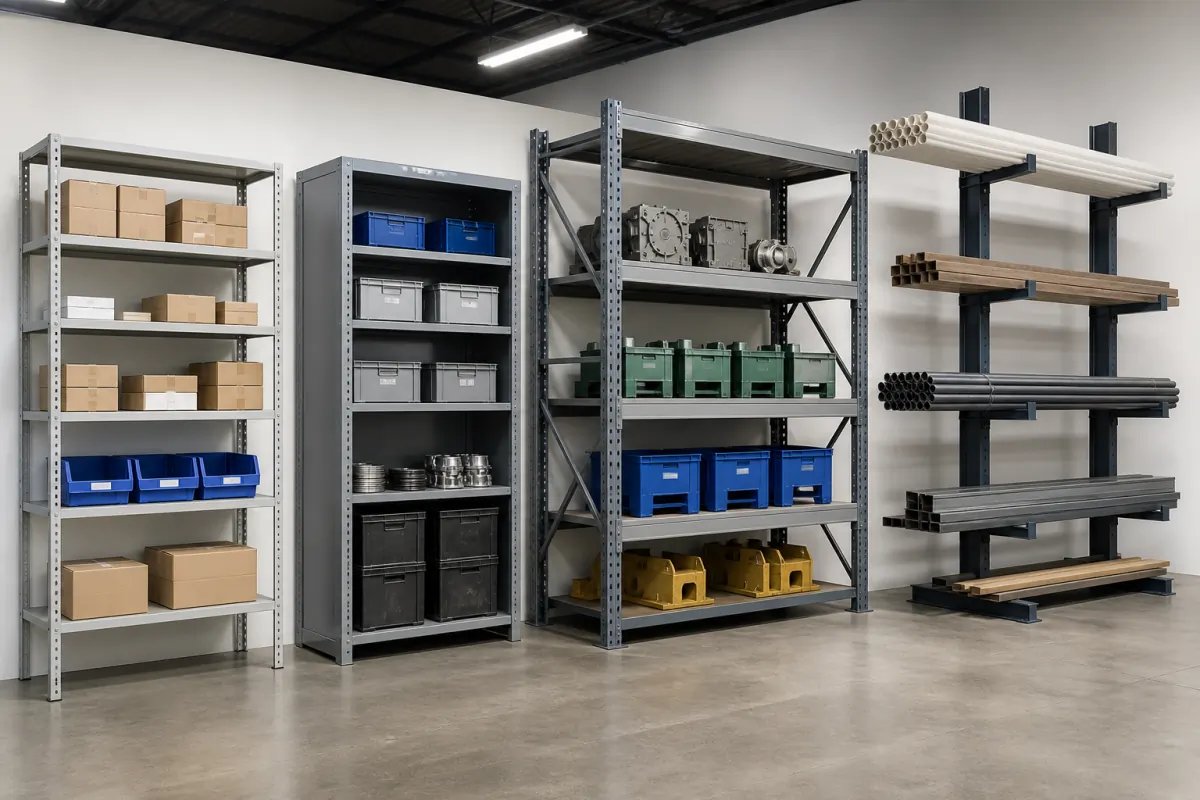
Boltless (rivet) shelving locks beams into keyhole slots with no fasteners, typically carrying 500 to 3,000 lbs per shelf depending on beam profile and decking. It assembles fast, reconfigures in 1.5-inch increments, and is the default for parts rooms, stockrooms, and pick areas.
Steel clip shelving uses closed or open posts with clip-in shelves. It suits smaller parts at higher shelf density, and closed versions add rigidity and keep items from falling through the sides — which is why it shows up in controlled storage and government facilities where documented, labeled storage matters.
Wide-span shelving bridges the gap to pallet racking: heavier beams over longer spans for bulky items that are hand-loaded but too heavy for standard shelving. Machine components, dies, and heavy cased goods live here.
Cantilever shelving handles long items — bar stock, pipe, trim — at shelf scale. It follows the same arm-and-column logic as full cantilever racking, just smaller.
How load ratings actually work
Every published shelf capacity assumes a uniformly distributed load — the weight spread evenly across the shelf. A concentrated load placed mid-span can exceed the rated moment at well under the stated weight, and that is the failure we see most often in parts rooms where the heavy items end up grouped in one spot.
Two more rules that surprise buyers:
Capacity falls as span increases. Widening a bay to save on uprights routinely costs more capacity than it saves in material, because the same beam carries less over a longer span.
The rating belongs to the system, not the shelf. Beam, upright, clip, and decking are rated together, by manufacturer and series. Mixing components that happen to fit invalidates the number you would rely on for labeling.

“Heavy duty” on its own means nothing — we have seen it applied to 350-lb shelves and 3,000-lb shelves. Ask for the capacity per shelf at the span quoted, in writing.
Decking and environment decide the rest
Decking affects capacity, fire protection, and serviceability together. Particle board is cheapest and suits light dry goods. Steel decking carries more and survives impact. Wire decking lets sprinkler water through, which makes it a fire-code requirement above certain storage heights and commodity classifications rather than a preference.
Environment rules products out fast. Cold and freezer storage change adhesive and coating behavior and generally eliminate particle board. Washdown areas in food processing corrode standard powder coat at the connections, pushing toward galvanized or specialized coated systems. High-humidity or outdoor-adjacent areas favor galvanized over paint.
And in most of our Mountain West service area, tall shelving runs need anchorage and sometimes overhead restraint — a loaded shelving unit becomes a tipping hazard in a seismic event long before it becomes a structural failure. The permits and seismic guide covers why that varies by jurisdiction.
Where gondola shelving fits
Gondola shelving is the retail-facing cousin: pegboard or slatwall backs, adjustable display shelves, designed for presentation and customer access rather than raw capacity. If your operation has a front counter — parts sales, a will-call area, a showroom — you likely need both systems in one building, and they are not interchangeable.
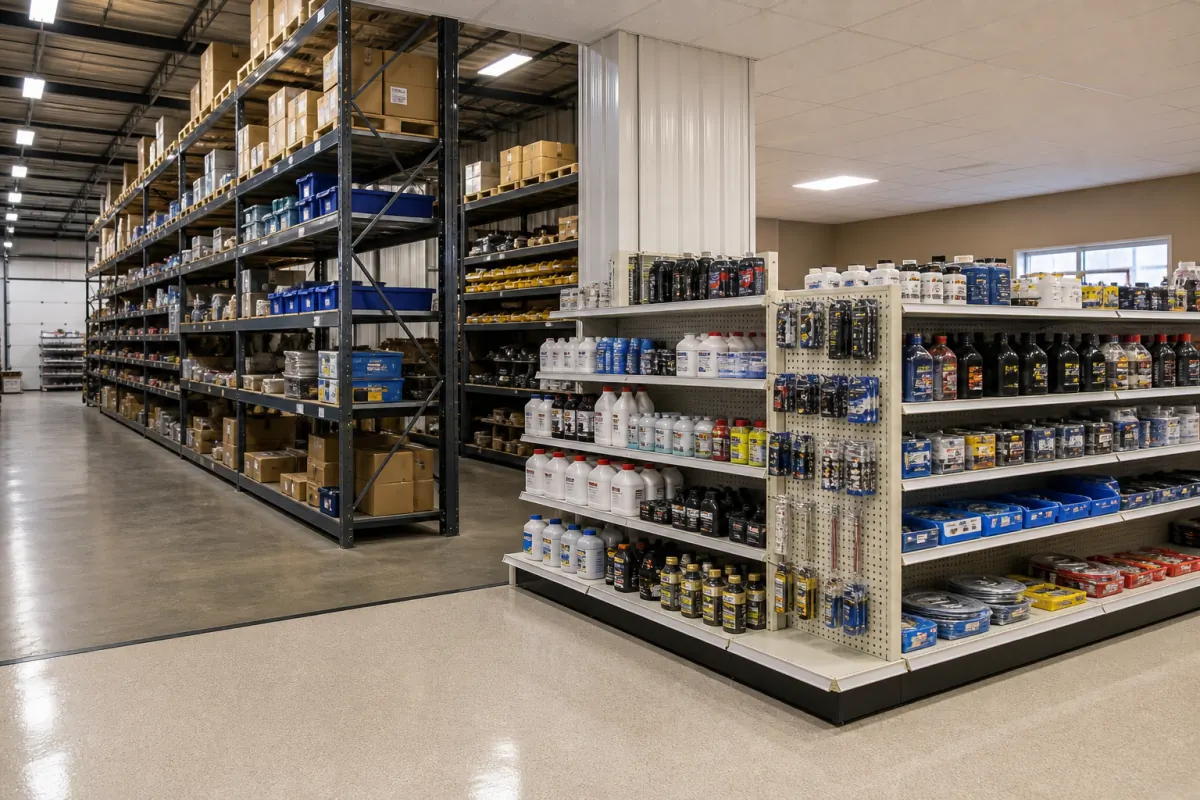
The practical division: gondola out front where customers pick, industrial shelving in back where staff pick, and a capacity-rated system wherever anything heavy lives. Trying to save money by running retail gondola in the stockroom is a false economy — the capacities are not close.
A buying checklist
- Who places the load — person or machine?
- Heaviest realistic load on one shelf, and where it sits on the shelf
- Capacity per shelf at the quoted span, in writing
- Decking — and whether fire code requires wire
- Environment — cold, washdown, humidity, outdoor-adjacent
- Anchorage — tall runs in seismic country need it
- Manufacturer and series — so future add-ons match the rated system
Send us what you store, the heaviest items, and the room dimensions, and we will return a configured layout with capacities stated per shelf. Request a quote, or see the full range on the warehouse and industrial shelving page.