Pallet racking is one of the most important systems in any warehouse, but when it’s installed incorrectly, overloaded, damaged, or ignored over time, it turns into one of the biggest safety risks on the floor.
For Utah warehouses in Salt Lake City, Ogden, Provo, Logan, Lehi, and the surrounding Wasatch Front, rack safety carries extra weight because many systems also need to meet local building, fire, and seismic requirements. OSHA requires that stored materials be stable and secure against sliding or collapse, and that storage areas stay free of hazards.
Disclaimer: This article is for general information only. Always confirm current OSHA standards, local Utah building codes, fire code requirements, city permitting rules, and guidance from a qualified engineer or local authority having jurisdiction before installing, modifying, or approving pallet racking.
Here are the violations our team sees most often, and what to do about each one.
1. Damaged Uprights, Beams, or Bracing
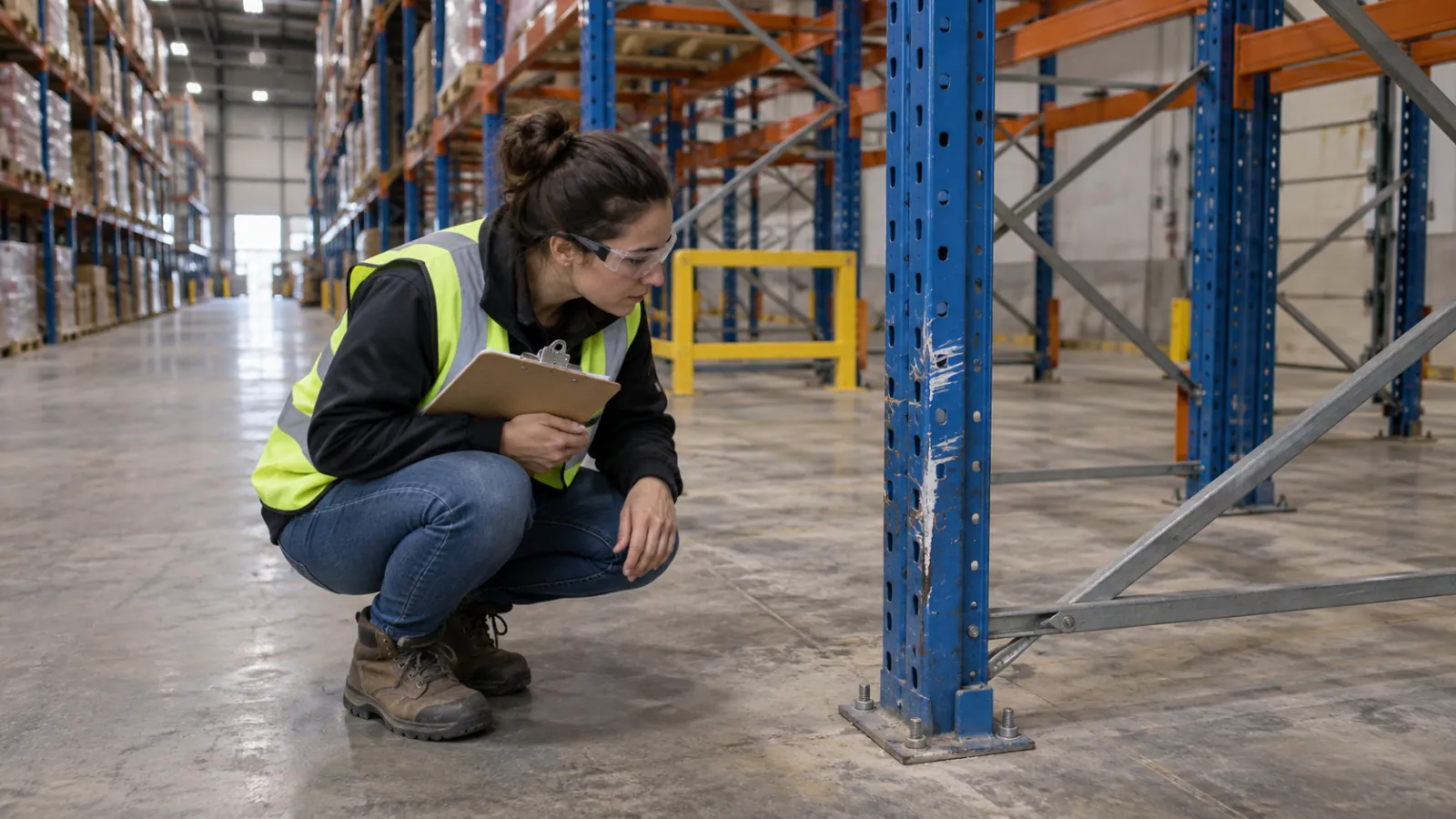
Forklift impacts, pallet strikes, and everyday warehouse traffic can bend uprights, damage horizontal braces, or weaken beam connections. Even damage that looks minor shouldn’t be ignored. Watch for bent upright columns, twisted or cracked beams, damaged footplates, missing beam safety clips, broken welds, and leaning rack frames.
If a component is damaged, the safest move is to unload the affected bay and have it inspected before it’s used again.
2. Overloaded Pallet Rack Beams
Loading racking beyond its rated capacity is one of the most common violations we see, usually because a business added heavier products, changed pallet sizes, or reused old racking without confirming beam and upright capacities. Every rack system has a known load capacity based on upright size, beam length, beam profile, shelf levels, and product weight. Guessing isn’t safe, and overloading can cause beams to bow, connectors to fail, or entire bays to become unstable.
3. Missing or Incorrect Load Capacity Labels
Without clearly posted capacity information, employees can overload beams without realizing it. Every rack system should have visible labeling showing maximum beam level capacity, maximum bay capacity, pallet weight limits, and any special loading instructions. This matters even more with used pallet racking, since beams and uprights may come from different systems or previous layouts.
4. Missing Anchor Bolts or Poor Floor Attachment
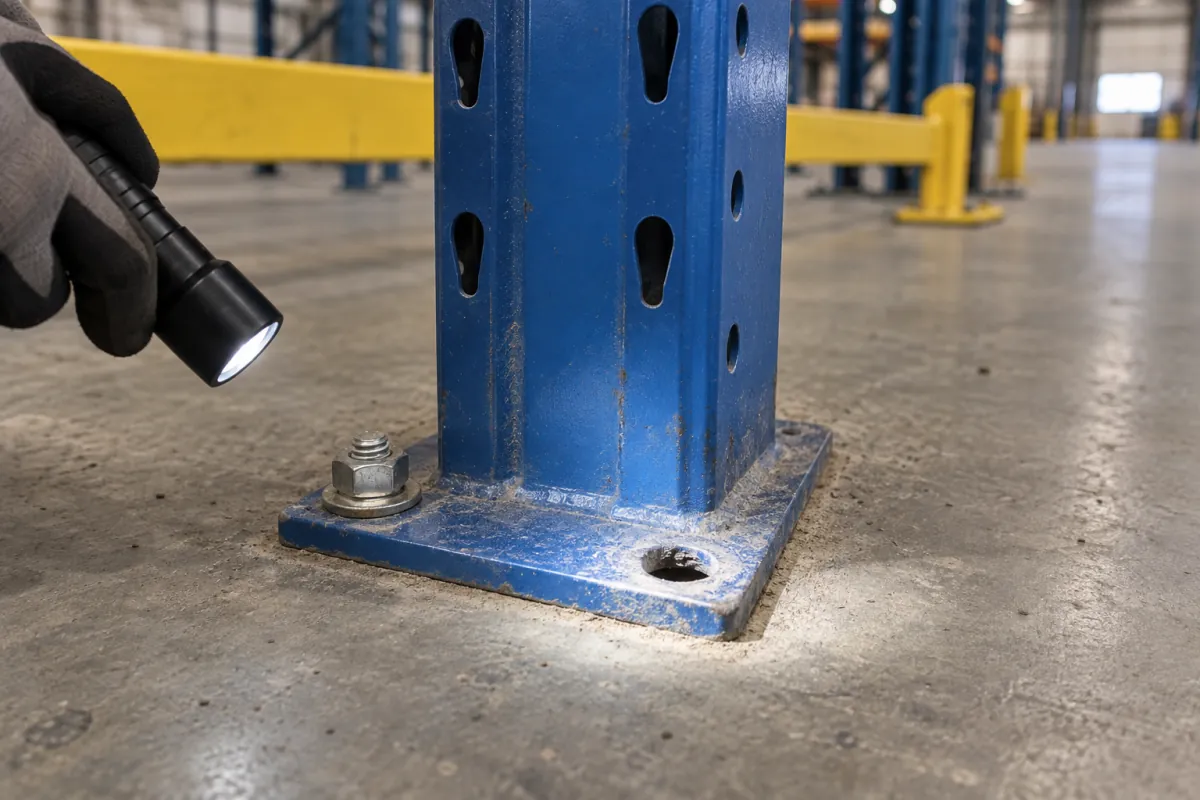
Rack uprights need to be anchored according to the system design and local requirements. Missing, loose, or incorrectly installed anchors reduce rack stability, especially where seismic design matters. In Utah, rack permitting can involve structural plans stamped by a Utah-licensed structural engineer, with seismic design following standards like ASCE 7 depending on the jurisdiction. Common issues include missing or loose anchors, cracked concrete around baseplates, uprights installed on uneven floors, and racks that were moved or reconfigured without being re-anchored.
5. Poor Aisle Clearance
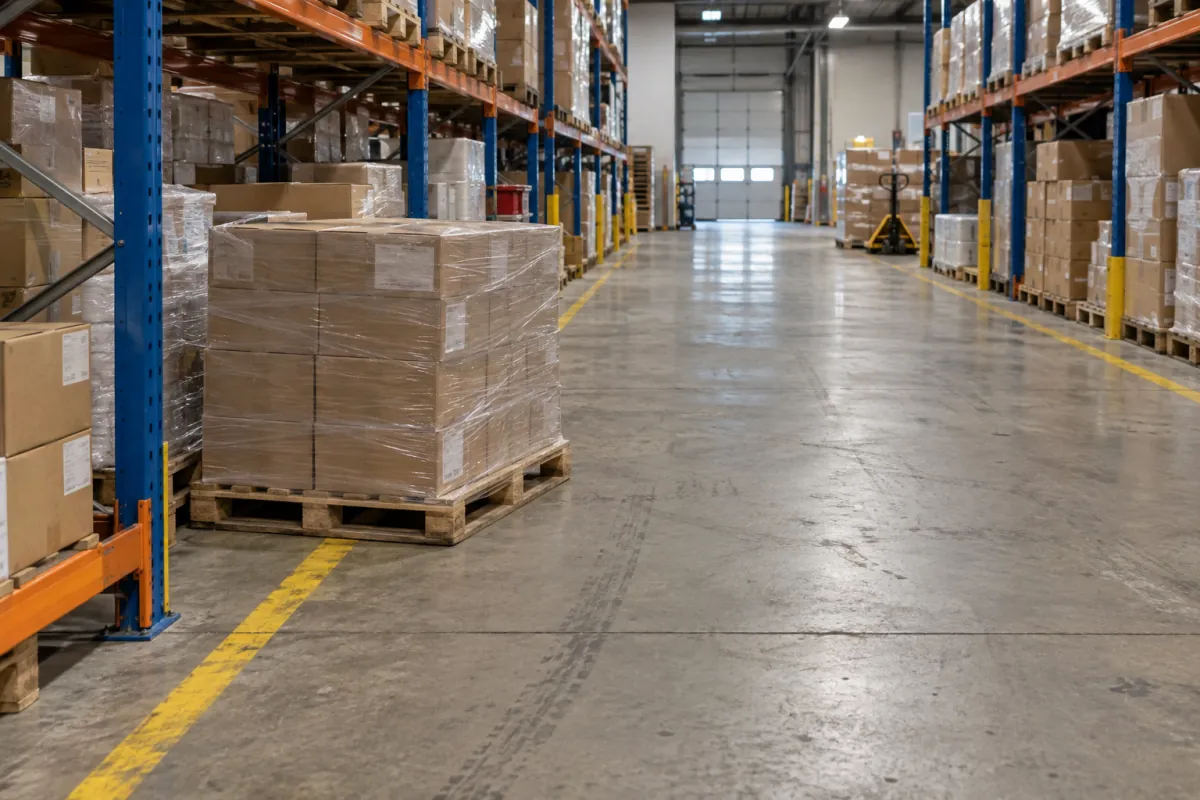
Aisles need to allow forklifts, pallet jacks, and employees to move safely. Pallets sticking into aisles, product staged in forklift paths, aisles too narrow for the equipment being used, and blocked emergency exits all create real hazards, and increase the odds of a rack impact.
6. Unstable or Improperly Stored Loads
Even the strongest racking can’t compensate for unsafe storage. OSHA requires stored materials to be stacked, blocked, interlocked, and limited in height so they’re stable and secure. Watch for broken pallets stored overhead, product leaning over beam edges, unwrapped or unstable loads, and mixed pallet sizes that don’t sit correctly on beams or wire decking.
7. Missing or Improper Wire Decking
Wire decking supports pallets and reduces the chance of product falling through the rack system. A common issue in older warehouses is missing decking, damaged decking, or decking that doesn’t properly fit the beam depth. Decking should match rack depth and load requirements, not stand in for proper pallet placement or beam capacity. Similarly, racks that need containment on the back or sides should have proper safety backing in place, not a gap where product can fall through.
8. Unpermitted Rack Installation or Reconfiguration
In many Utah cities, pallet racking requires permits, especially for taller systems, seismic considerations, fire protection clearance, or structural review. Salt Lake City’s racking permit guidance, for example, calls for a building permit on racking exceeding 5 feet 9 inches in height. Never assume racking can be installed or moved without checking local requirements first.
9. No Regular Rack Inspections
Many safety problems happen simply because damage goes unnoticed. A warehouse can operate for months with bent uprights, missing clips, overloaded bays, or loose anchors before anyone catches it. A simple internal routine, checking for impact damage, beam deflection, missing clips, loose anchors, leaning frames, and unsafe storage, catches problems early. For larger facilities, a professional rack inspection is worth scheduling regularly, and always after layout changes or forklift impacts. Our guide on the importance of regular pallet rack inspections covers how to build that routine into an ongoing program.
10. Mismatched Rack Components
Used pallet racking can be a smart way to save money, but mixing incompatible components creates its own risks. Before installing used racking, confirm that beams lock properly into uprights, safety clips fit correctly, uprights are the right depth and capacity, beam lengths match the intended load, and no components are damaged or modified.
Most Violations Are Preventable
Nearly every issue on this list comes down to the same fundamentals: correct layout, proper installation, accurate capacity planning, routine inspections, and attention to local code requirements. Catching these early is far cheaper than dealing with a failure later. For more on what causes racking to fail structurally, see our guide to common causes of pallet rack failure. If you’d like a second set of eyes on your own racking, our rack safety inspection service covers exactly these items.
Rack Safety Across Utah
Rocky Mountain Warehouse Solutions helps Utah businesses with new and used pallet racking, warehouse layouts, permitting guidance, and ANSI/RMI certified installation. We know the local code landscape from Salt Lake City to Logan, and we build systems that are safe, compliant, and built to last.
Get a free warehouse layout consultation or contact our team to schedule a rack safety review for your facility.
Related reading: Do You Need a Permit to Install Pallet Racking in Utah?, the importance of regular pallet rack inspections, and What Is Pallet Rack Safety Backing?
Frequently Asked Questions
What is the most common pallet racking safety violation? Damaged uprights and beams from forklift impacts, along with overloading beyond rated capacity, are the two violations we see most often in Utah warehouses.
Does pallet racking in Utah require a permit? It depends on the city and the height of the system. Salt Lake City, for example, requires a building permit for racking exceeding 5 feet 9 inches. Always confirm requirements with your local jurisdiction before installing or reconfiguring racking.
How often should pallet racking be inspected for safety? A weekly visual check by warehouse staff, combined with a more thorough professional inspection at least once a year, is a good baseline. Facilities with heavy forklift traffic or frequent layout changes should inspect more often.
Is it safe to mix used pallet racking components from different manufacturers? No. Components from different manufacturers may fit together physically but aren’t engineered to work as a system, which can compromise capacity and stability even when the racking looks fine.