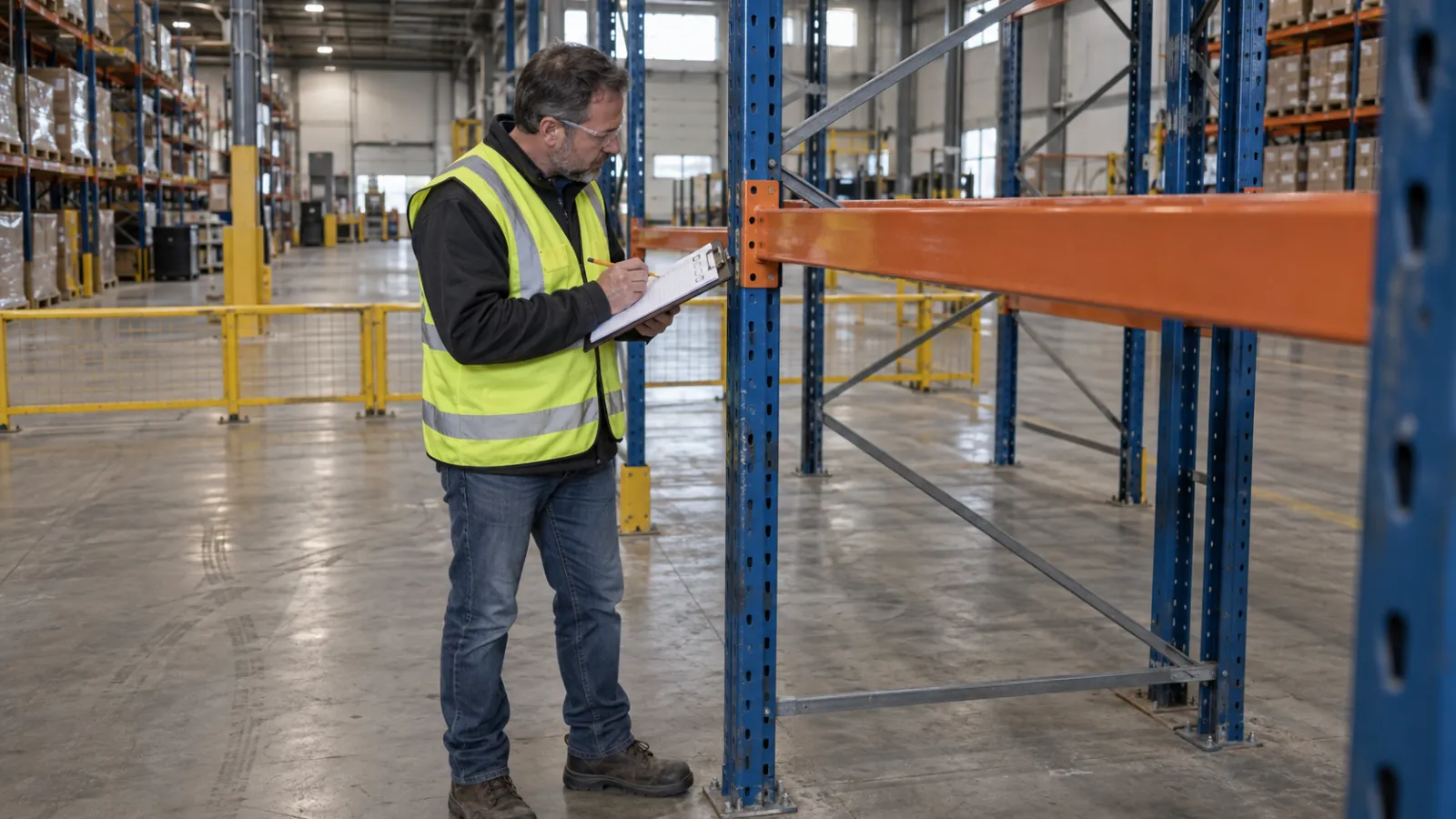
A well-organized warehouse depends on pallet racking that stays structurally sound under constant use. These systems hold thousands of pounds of product and take daily stress from forklifts, loading, and general warehouse traffic. Like any equipment under that kind of strain, racking deteriorates over time, and regular inspection is what catches that deterioration before it becomes a safety incident.
This guide focuses on building an ongoing inspection program, not a one-time check. If you’re evaluating a specific rack for damage right now, our guide on common causes of pallet rack failure covers what to look for. If you’re inspecting a used system before buying it, see is used pallet racking safe.
Why Regular Inspections Are Non-Negotiable
Ignoring pallet rack inspections leads to safety and operational setbacks that are far more expensive than the inspection itself. A few reasons regular inspection matters:
Preventing system failure. Routine inspection catches early signs of trouble, like rust, corrosion, or structural damage, before they escalate into a collapse.
Protecting employees. A damaged rack is a hazard for anyone working near it or loading inventory onto it.
Maintaining OSHA compliance. OSHA requires employers to maintain safe working conditions, and documented, regular inspections are part of meeting that standard. Our OSHA compliance guide covers the broader safety requirements for warehouses.
Minimizing downtime. Catching damage early means smaller repairs and fewer operational interruptions.
Saving money. Addressing issues early reduces the risk of expensive emergency repairs, lost inventory, and insurance claims.
What to Look for During a Pallet Rack Inspection
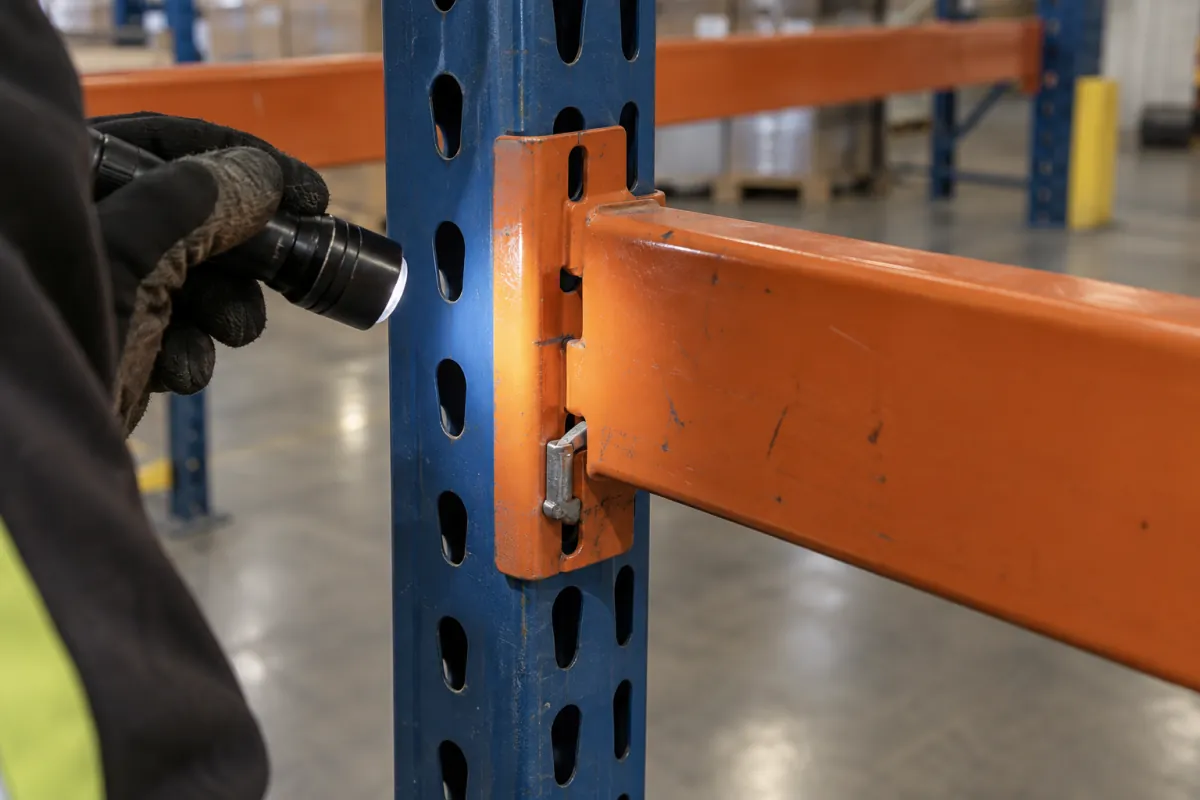
A consistent, detailed approach is what makes an inspection program actually work. Key points to check include:
- Bent or damaged upright beams
- Missing or broken safety clips and pins
- Overloaded or improperly loaded racks
- Rust, corrosion, or paint damage
- Floor anchoring issues or loosened base plates
- Misaligned or leaning frames
- Forklift damage, especially at lower levels
- Deflection or bowing in horizontal beams
- Unauthorized modifications or repairs
- Missing or unclear load capacity signage
- Missing, damaged, or absent safety backing on racks that require it
If any of these look familiar from a specific rack you’re worried about right now, our guide on common pallet racking safety violations walks through the most frequently cited issues in more detail. Bent uprights, sagging beams, and product shifting are also classic signs a pallet rack is overloaded, and inspection is usually how that gets caught first. If a rack is missing containment where it’s needed, our guide on pallet rack safety backing covers what to look for and which type fits your setup, and our rack safety and protection products cover the options.
How Often Should You Inspect Your Racking?
Inspection frequency depends on your facility’s size, traffic, and usage patterns, but a few general guidelines apply broadly:
Visual checks. Your team should perform quick visual inspections daily or weekly to catch minor damage as soon as it appears.
Monthly inspections. A trained supervisor should perform a more thorough visual inspection monthly to track the ongoing condition of the racking.
Annual inspections. A formal inspection from a qualified inspector at least once a year is a widely recommended baseline.
If your warehouse sees frequent forklift activity, high inventory turnover, or recent layout changes, increase the frequency. You should also schedule an inspection immediately after any rack impact, no matter how minor it seems, since even small impacts can cause damage that isn’t visible right away.
Best Practices for an Effective Inspection Program
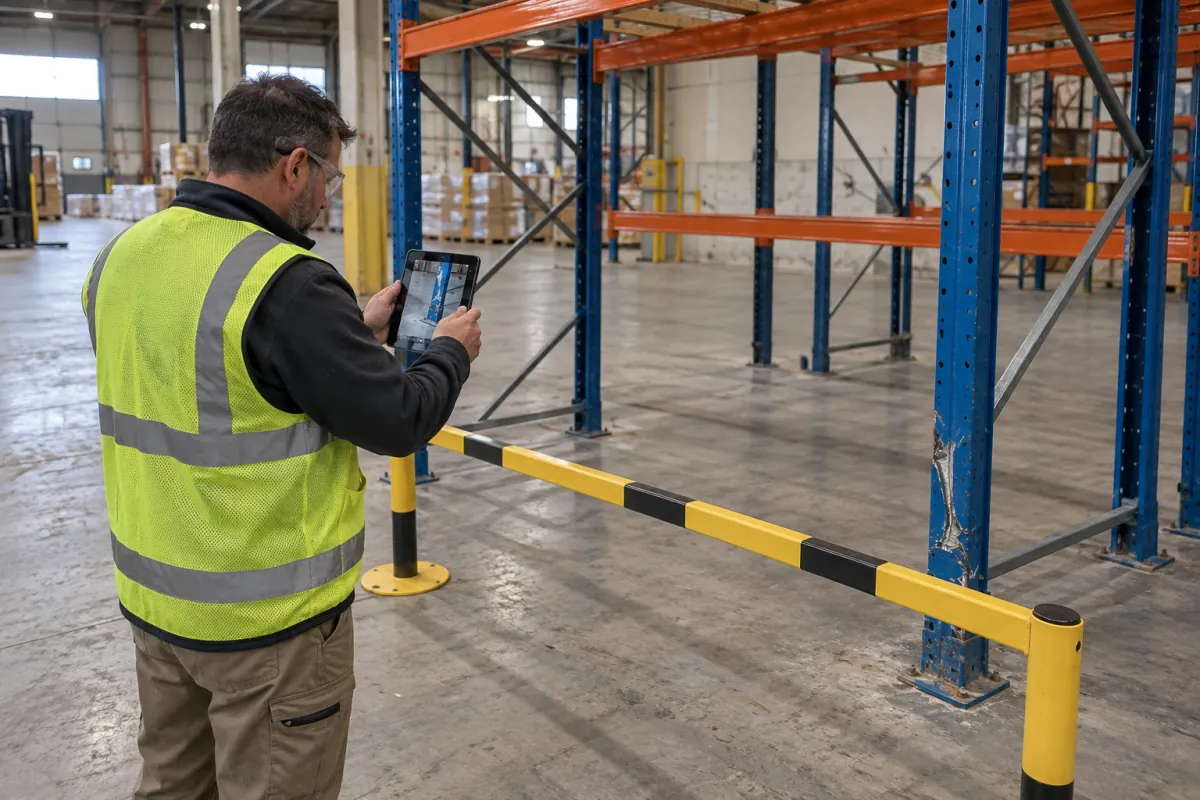
A few habits separate an inspection program that actually catches problems from one that exists on paper only:
- Create a checklist. A standardized, documented list of inspection points ensures nothing gets missed.
- Document everything. Keep records of inspection dates, findings, and repairs for both insurance and OSHA purposes.
- Act quickly. If you find an unsafe or severely damaged rack, remove it from service immediately and schedule repairs.
- Add protection where it makes sense. Guardrails and rack protectors reduce the risk of future damage in high-traffic areas.
- Stay proactive. Treat inspections as prevention, not as a reaction to a problem that already happened.
Build Your Inspection Program
Whether you manage a small storage room or a large distribution center, a consistent inspection schedule protects your employees, your inventory, and your bottom line. If you want help designing an inspection program or addressing damage that’s already been found, see our rack safety inspection service, get a free warehouse layout consultation, or contact our team.
Related reading: OSHA Compliance: Essential Safety Standards for Warehouses, Is Used Pallet Racking Safe?, and our rack safety inspection service
Frequently Asked Questions
How often should pallet racks be inspected? Visual checks should happen daily or weekly, a supervisor should perform a more thorough inspection monthly, and a qualified inspector should conduct a formal inspection at least once a year, more often for high-traffic warehouses.
What should a pallet rack inspection checklist include? A good checklist covers bent or damaged uprights, missing safety clips and pins, rust or corrosion, anchoring and base plate issues, misaligned frames, forklift damage, beam deflection, and missing load capacity signage.
Are pallet rack inspections required by OSHA? OSHA requires employers to maintain safe working conditions, which includes regular inspection of racking systems that could pose a hazard if damaged. Documented, consistent inspections support that compliance.
What should I do if an inspection finds damage? Remove the affected section from service immediately and schedule a repair or replacement assessment before it’s loaded again. Don’t wait for the next scheduled inspection to address known damage.