Warehouse safety is a daily concern anywhere heavy equipment and stacked inventory share the same floor space. Falling items, blocked aisles, and cluttered walkways lead to accidents, injuries, and costly downtime, which is exactly why the right storage system matters as much as any safety policy you put on paper. Pallet racking doesn’t just maximize space. Done right, it plays one of the biggest roles in keeping your team and your inventory safe.
1. Organized Storage Reduces Clutter and Trip Hazards
Pallet racking keeps your warehouse floor clear by storing inventory up and off the ground instead of staged in aisles or corners. Beyond maximizing space, that reduces the clutter that causes trip hazards in the first place. With better organization, workers can reach what they need without navigating stacks of boxes or improvised storage. Clean, clearly defined walkways improve visibility and make accidents far less likely.
2. Rated Load Capacity Helps Prevent Collapses
Overloading racking is one of the fastest ways to create a serious hazard. Using properly rated racks, and actually knowing what each one can hold, prevents dangerous collapses before they start. Evenly distributing weight across shelves keeps the structure stable and reduces the risk of tipping or buckling. Clear capacity labeling combined with basic employee training means everyone on the floor understands safe load limits, not just the person who ordered the racking.
3. Well-Planned Racking Improves Forklift Safety
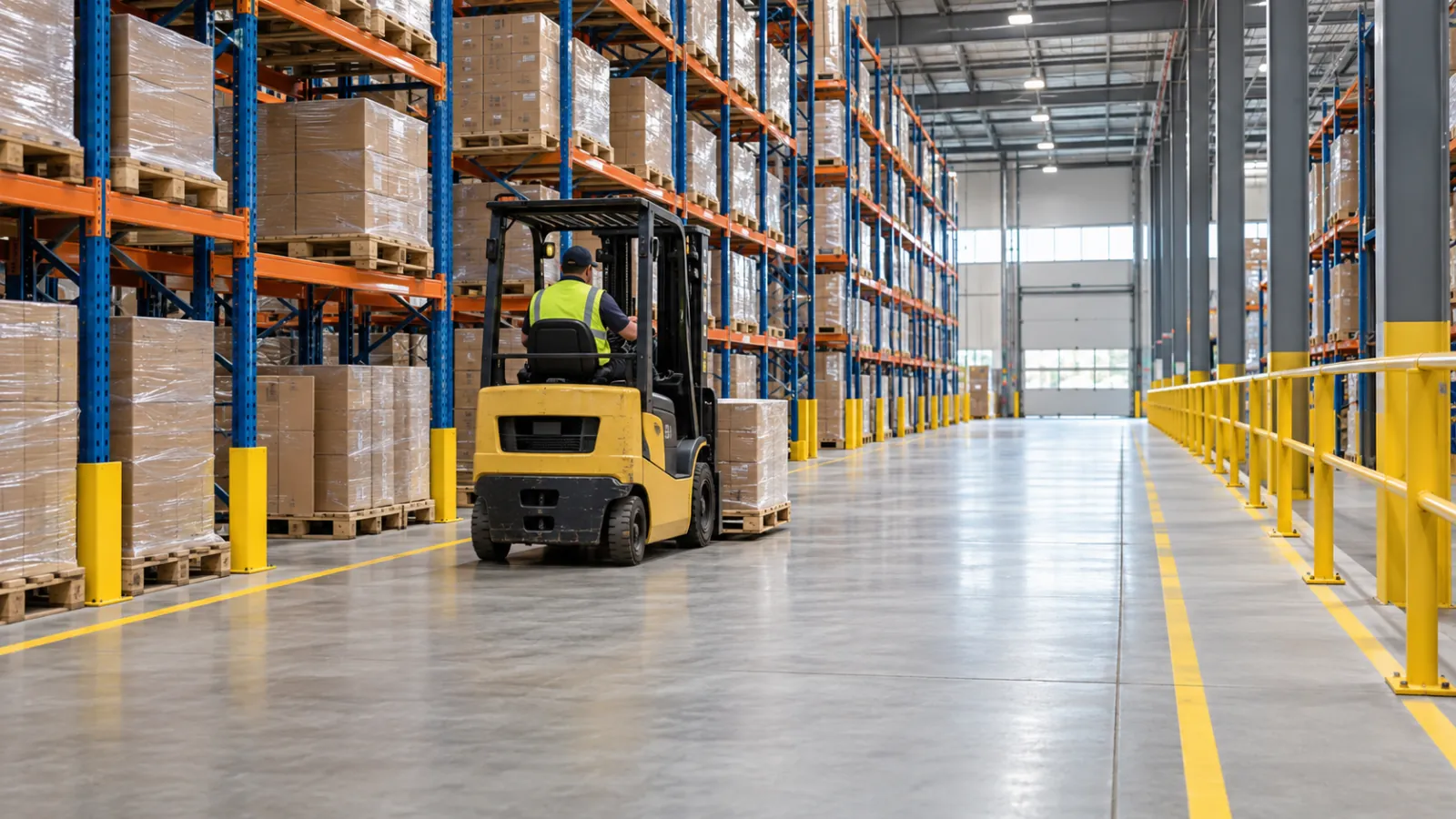
Good racking layout makes forklift operation smoother and safer. Clear aisles and organized rack rows give operators the room they need to maneuver confidently, cutting down on the chance of bumping stacked goods or nearby workers. Systems like selective racking are designed with forklift access in mind, allowing quick, straightforward pallet retrieval without tight turns or awkward angles. When forklift routes are planned deliberately instead of improvised, the entire warehouse runs with fewer near-misses.
4. Protects Workers From Falling Items
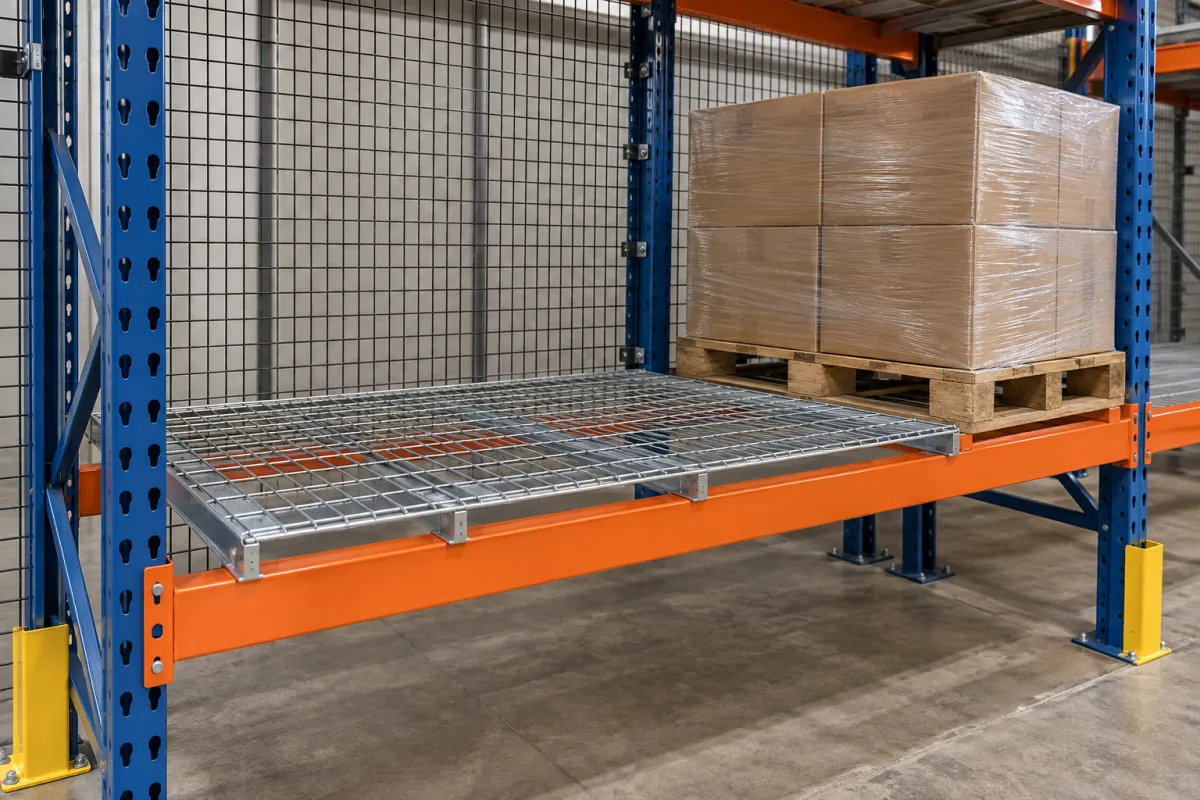
Falling product is one of the most serious risks in any warehouse, and a properly installed racking system directly reduces it. Elevating and securing inventory cuts the odds of pallets or boxes coming down unexpectedly. Safety accessories like wire decking, pallet supports, and horizontal safety bars add stability and keep loads where they belong. Backstops and safety netting provide an added layer of protection, catching items before they become a hazard on the floor below. See our guide on what is pallet rack safety backing and our rack safety and protection products for these containment options in more detail.
5. Supports Fire Safety and Emergency Access
Racking layout plays a bigger role in fire safety than most people realize. Well-spaced, organized racking keeps fire exits clear and accessible at all times, which matters most during an actual emergency. It also helps avoid blocking critical systems like overhead sprinklers and emergency lighting. In a warehouse packed with inventory, a thoughtful layout can be the difference between a fast, safe evacuation and a chaotic one, and it supports compliance with fire and safety codes at the same time.
6. Custom Configurations Improve Workflow and Safety Together
Custom racking is more than a storage upgrade, it’s a safety tool. Tailoring your system to your space and inventory reduces how often employees need to lift, reach, or maneuver heavy items manually, which cuts down on repetitive strain injuries and awkward lifting. Thoughtful racking design also guides traffic flow, separating forklift paths from foot traffic and creating clearly marked work zones instead of leaving people to guess.
7. Regular Inspections Keep the System Reliable
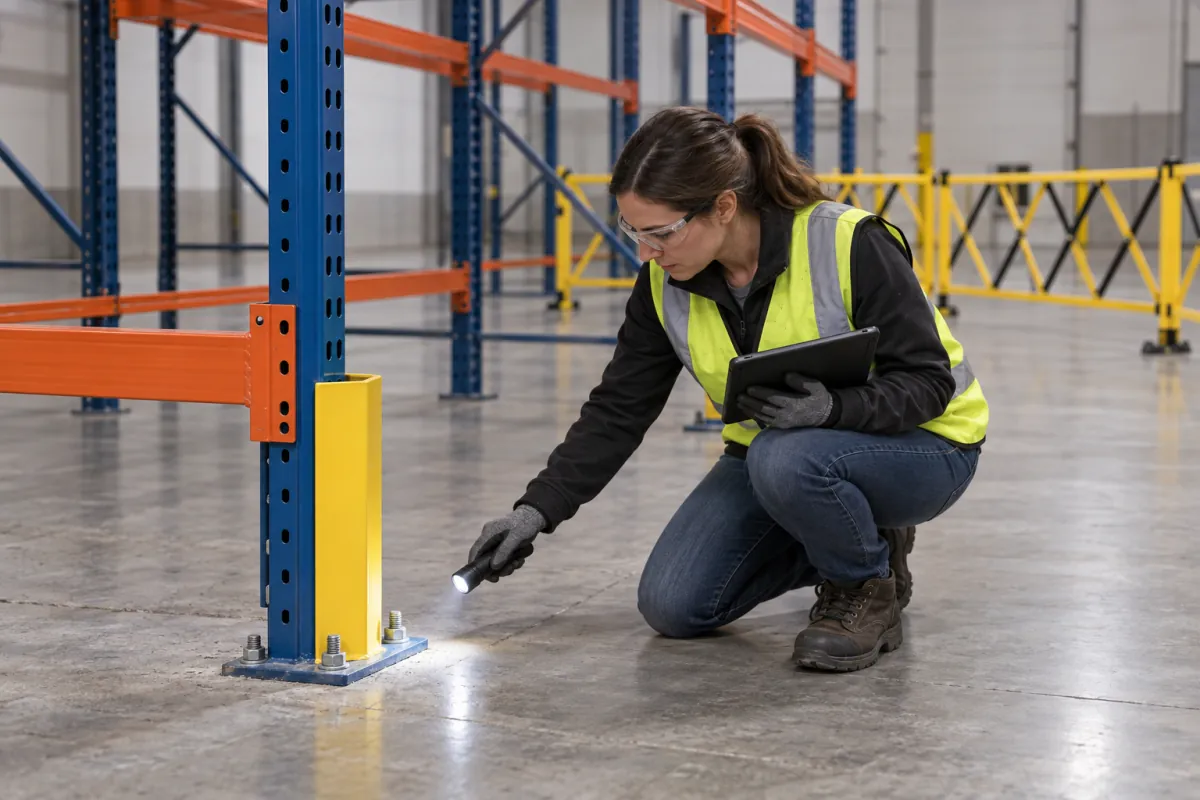
Routine inspection and maintenance are what keep a racking system safe over the long run. Wear and tear from daily operations leads to rust, loose bolts, or misaligned beams over time, all of which weaken the structure if left unaddressed. Regular checks catch small problems before they become expensive repairs or serious hazards. For more on what puts racking at risk, see our breakdown of common causes of pallet rack failure and our warehouse racking safety guide, for how to build an inspection routine, see the importance of regular pallet rack inspections, and for a professional evaluation of your system, see our rack safety inspection service.
Building a Safer Warehouse From the Ground Up
Warehouse safety isn’t one policy or one piece of equipment. It’s the combination of a properly designed racking system, trained employees, and routine maintenance working together. Get the racking right, and most of the daily hazards on a warehouse floor become a lot easier to manage.
Safer Warehouses Across the Mountain West
Rocky Mountain Warehouse Solutions designs racking systems with safety built in from the start. Our ANSI/RMI certified team handles custom layout design, professional installation, and ongoing inspection support for warehouses throughout the Mountain West.
Get a free warehouse layout consultation or contact our team to talk through a safer setup for your facility.
Related reading: OSHA Compliance: Essential Safety Standards for Warehouses, the importance of regular pallet rack inspections, our rack safety inspection service, and rack safety and protection products
Frequently Asked Questions
How does pallet racking improve warehouse safety? Pallet racking reduces trip hazards by getting inventory off the floor, prevents collapses when loaded within rated capacity, improves forklift maneuverability with clear aisles, and protects workers from falling items with proper accessories like wire decking and safety bars.
What’s the biggest safety risk with pallet racking? Overloading beyond rated capacity is one of the most common and most dangerous risks, along with damage from forklift impacts that goes unnoticed and unrepaired.
How often should a racking system be inspected for safety? A basic visual check on a regular schedule, combined with a more thorough professional inspection at least annually, is a good baseline for most warehouses. Facilities with heavy forklift traffic should inspect more frequently.
Can a custom racking layout actually reduce workplace injuries? Yes. A layout designed around your specific workflow reduces manual lifting, awkward reaching, and improvised storage, all of which lower the risk of repetitive strain injuries and accidents caused by clutter or poor organization.