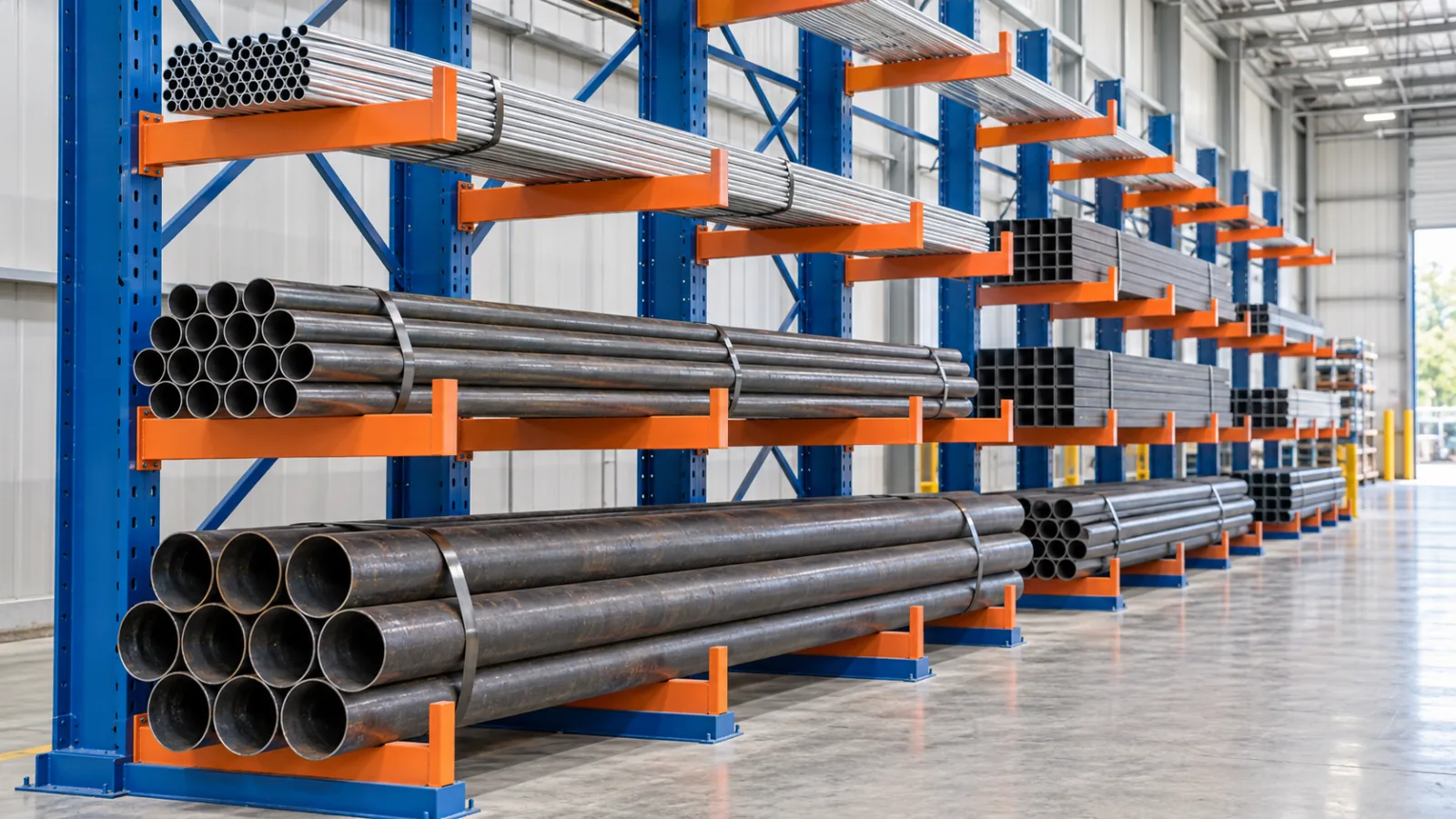
Cantilever racking is the go-to storage solution for long, heavy, or awkwardly shaped items like lumber, steel bars, pipe, and oversized furniture. Its open-arm design makes loading and unloading fast, especially with a forklift, but with several configurations to choose from, picking the wrong one can waste space or create a real safety hazard.
Here’s how to work through the decision, from your inventory to your layout to compliance requirements.
1. Start With Your Storage Needs
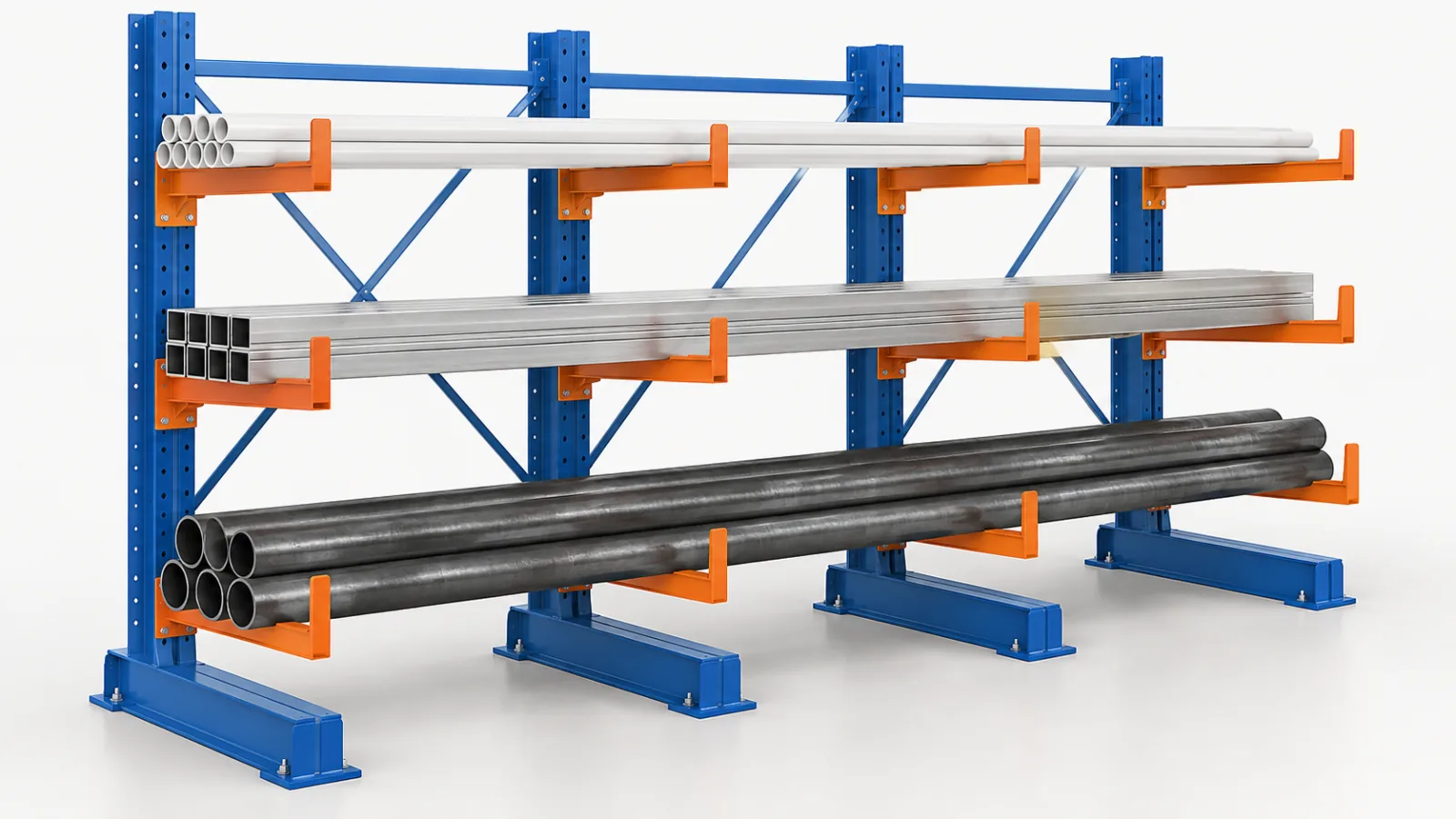
Before you invest in a cantilever racking system, get specific about what you’re storing. Measure the length, weight, and shape of your typical loads, since storing lightweight plastic pipe is a very different engineering problem than storing structural steel beams. If pipe or tubing is your main inventory, our guide on how to store pipe and tubing with cantilever racking goes deeper on arm setup and pipe stops.
Next, think about how often you access that inventory. High-turnover items usually call for more open, accessible arm configurations, while low-turnover product can sit higher or farther back. Also consider the environment: will the racking sit indoors, or will it be exposed to weather? Outdoor installations need weather-resistant coatings and corrosion-resistant materials to hold up long term.
2. Compare Rack Types and Design Options
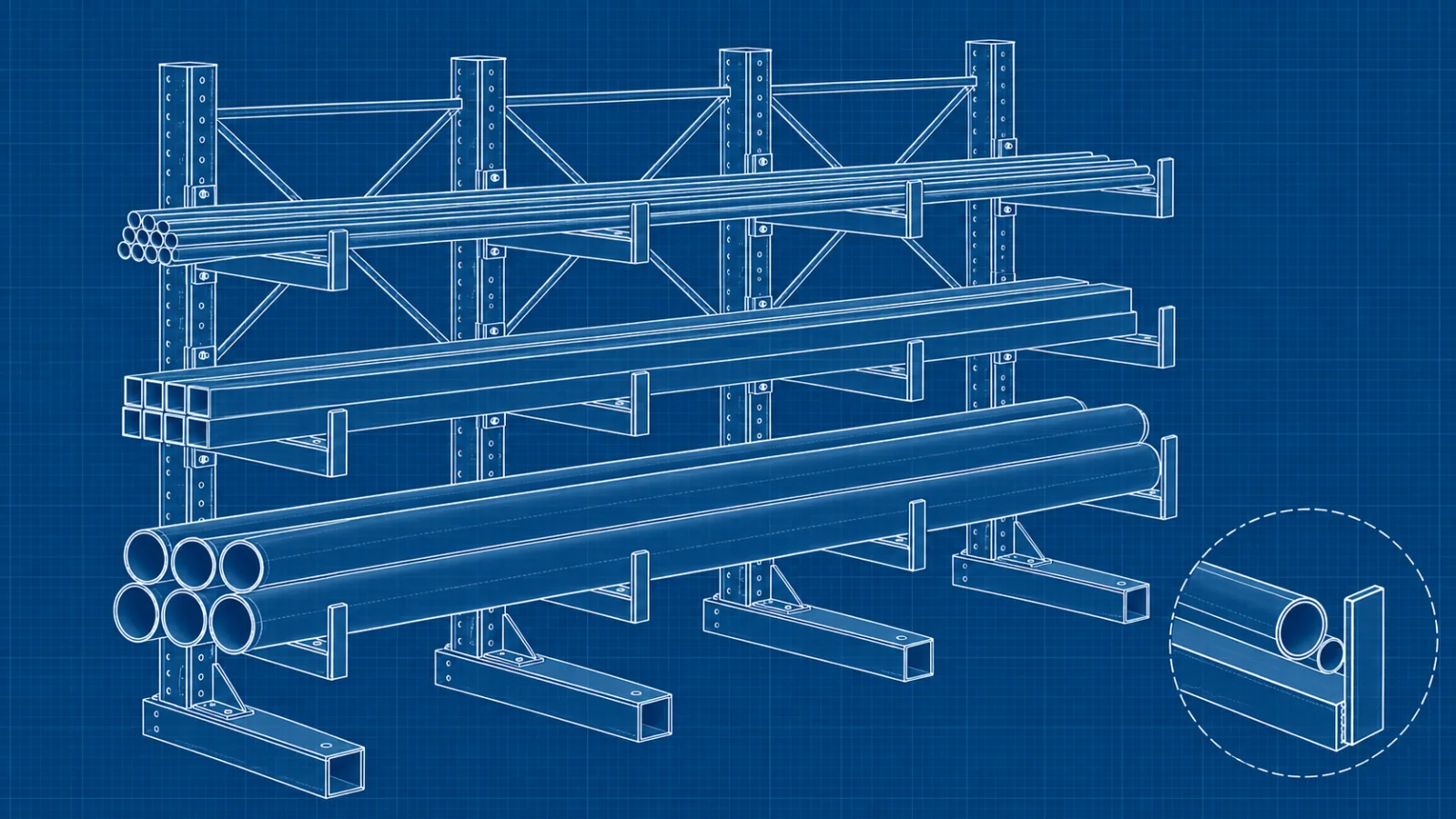
Choosing the right system is also about matching capacity and configuration to your operation. Start with the weight class of your inventory. Light-duty arms handle smaller items well, while heavy-duty systems are engineered for loads like structural steel or oversized furniture.
Think through your floor plan next. Single-sided racks work well against a wall, while double-sided racks, if you have the floor space, allow loading and retrieval from both sides for faster cycle times. Adjustable arms add flexibility, letting you reconfigure the system as your inventory changes instead of replacing it outright.
3. Factor In Your Warehouse Layout
Layout constraints shape which cantilever configuration actually works in your space. Aisle width needs to accommodate the forklifts or pallet jacks handling long or heavy loads. Cramped aisles create safety hazards and increase the odds of damaged inventory or damaged racking.
Ceiling height and available vertical space matter too, especially around lighting, sprinklers, and HVAC systems. And don’t overlook the floor itself: cantilever racks often require anchoring, and the floor needs to support the combined weight of the rack and a fully loaded system.
4. Prioritize Safety and Compliance
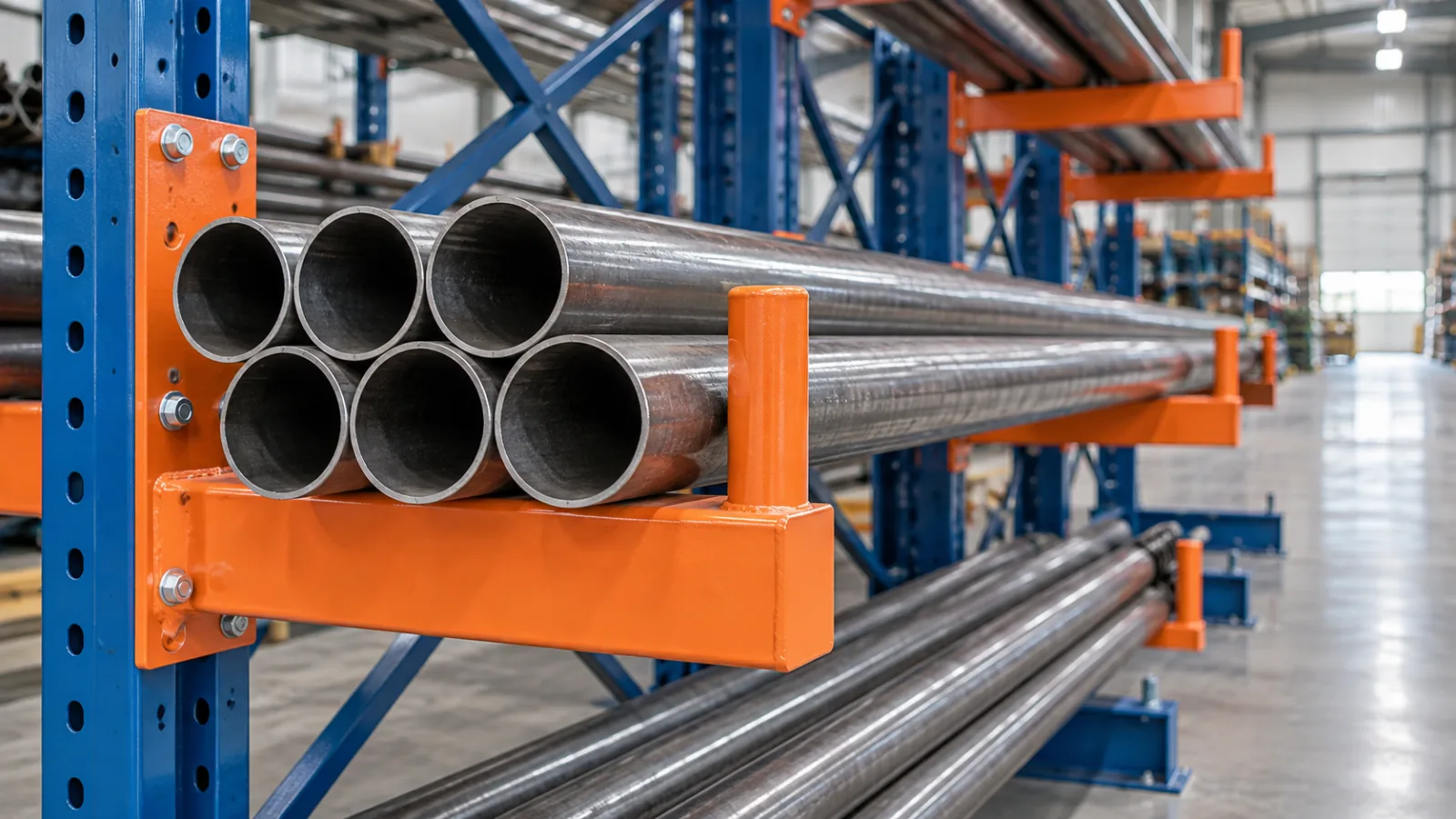
Safety can’t be an afterthought with cantilever racking. Systems need to meet OSHA and RMI (Rack Manufacturers Institute) standards, which cover everything from load limits to installation practices, and meeting them protects both your workers and your business from costly fines.
Professional installation matters here more than with most racking types. A properly installed cantilever system is level, secure, and correctly anchored, which significantly reduces the risk of tipping or collapse. Regular inspections catch damaged arms, loose anchors, or shifting loads before they turn into real problems.
When to Bring in an Expert
If your warehouse stores heavy, bulky, or irregularly shaped items, a racking professional can save you time, money, and a lot of trial and error. An experienced team evaluates your inventory, space, and workflow together, rather than sizing a system off one variable at a time, and can flag mistakes like overloading arms or wasting usable floor space before they happen. Whether you need an indoor or outdoor setup, expert guidance helps ensure the system is built to last and meets every applicable regulation.
Cantilever Racking Built for the Mountain West
Choosing the right cantilever rack comes down to understanding your inventory, your space, and your safety requirements together, not in isolation. Rocky Mountain Warehouse Solutions specializes in tailored racking solutions for warehouses across Utah, Nevada, Idaho, Colorado, Wyoming, Arizona, New Mexico, and Montana. Our ANSI/RMI certified team evaluates your materials, layout, and operational flow to recommend a system that’s efficient, durable, and fully compliant.
Get a free warehouse layout consultation or contact our team for expert guidance on the right cantilever system for your warehouse.
Related reading: Cantilever Racking: How to Store Lumber, Pipe, and Steel Without Wasting Floor Space, How to Store Pipe and Tubing with Cantilever Racking, and Pallet Racking vs. Cantilever Racking: Which Is Right for You?
Frequently Asked Questions
What is cantilever racking best used for? Cantilever racking is designed for long, heavy, or irregularly shaped items that don’t fit well on standard pallet racking, such as lumber, steel bars, pipe, and oversized furniture.
Should I choose single-sided or double-sided cantilever racking? Single-sided racking works well against a wall or in tighter layouts. Double-sided racking needs more floor space but allows loading and retrieval from both sides, which speeds up cycle times in higher-volume operations.
Does cantilever racking need to be anchored to the floor? In most cases, yes. Cantilever systems often require anchoring, and the floor needs to be able to support the combined weight of the rack structure and a fully loaded system.
How do I know if I need light-duty or heavy-duty cantilever arms? It depends on the weight class of what you’re storing. Light-duty arms are suited to smaller, lighter items, while heavy-duty arms are engineered for loads like structural steel, large pipe, or oversized furniture. A racking professional can size arms correctly based on your actual inventory.