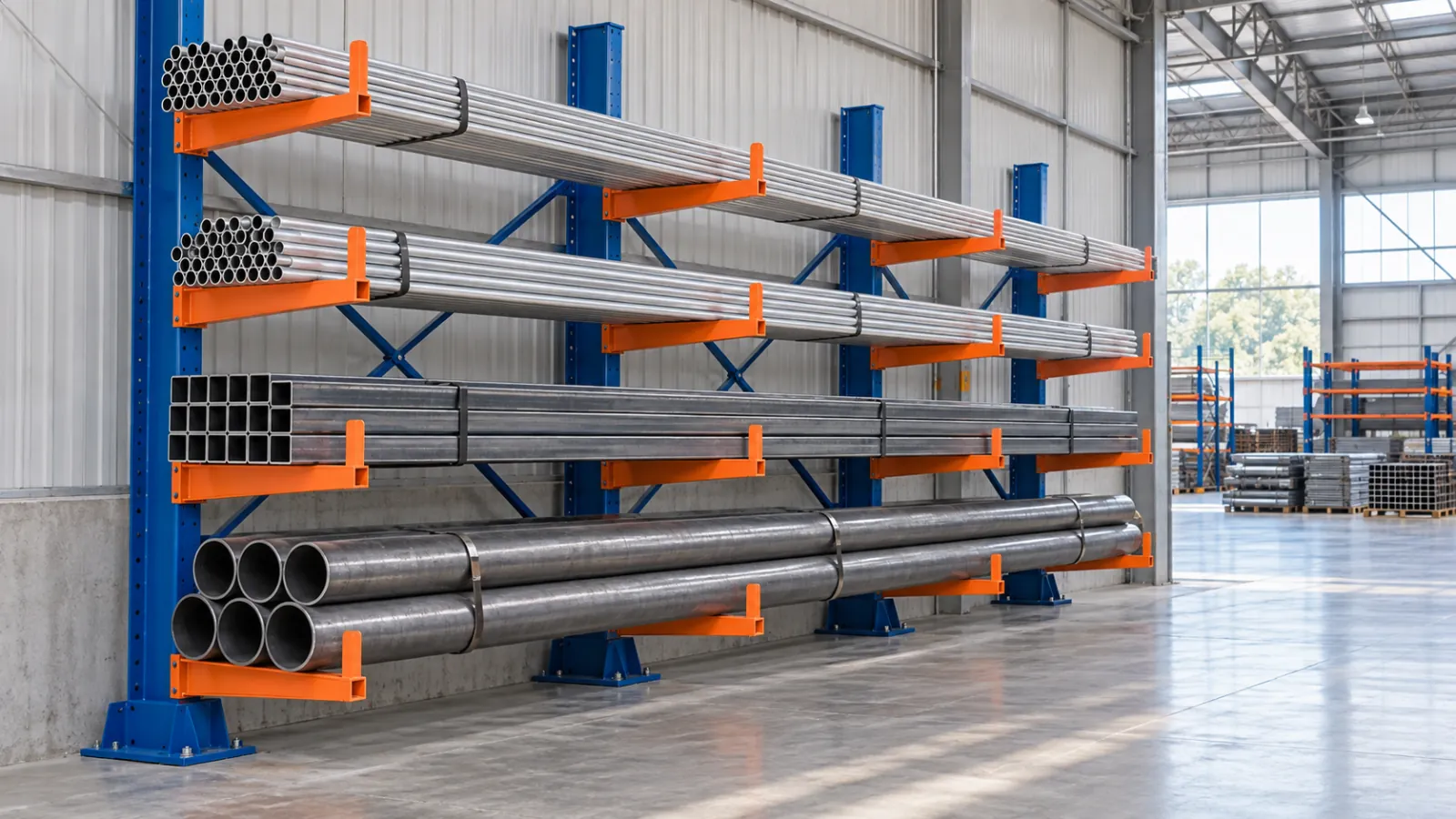
Storing pipe and tubing is a different problem than storing palletized product. Standard pallet racking is built around uniform pallet footprints, not long, cylindrical material that can vary widely in diameter, length, and weight. Stack pipe on the floor or improvise with standard shelving, and you end up with wasted space, damaged inventory, and a genuine safety hazard from material that can roll.
Cantilever racking solves this. Here’s how to set it up and use it correctly for pipe and tubing specifically.
Why Cantilever Racking Works for Pipe and Tubing
Unlike pallet racking, cantilever systems don’t have front vertical posts blocking access to stored material. Instead, horizontal arms extend from vertical columns, creating open, unobstructed storage levels. That design makes loading and unloading pipe fast, since a forklift can approach directly from the front without navigating around a frame.
The open-arm design also means a single system can handle a wide range of pipe diameters and lengths side by side, which is difficult to do efficiently with standard shelving.
Setting Up Cantilever Racking for Pipe and Tubing
Size arms to your actual inventory. Measure the diameter, length, and weight of what you’re storing before finalizing an arm configuration. Small-diameter PVC or aluminum tubing has very different support needs than heavy structural steel pipe.
Use adjustable arms where inventory varies. Cantilever arms that adjust vertically along the column let you store multiple pipe diameters and lengths within the same system, which matters if your inventory mix changes from job to job.
Match arm capacity to material weight. Steel pipe and tubing get heavy fast. Arms and columns need to be rated for the actual load, not just sized to the physical dimensions of the material.
Plan for the environment. Indoor cantilever systems are straightforward, but outdoor storage needs weather-resistant coatings and corrosion-resistant materials to hold up over time, especially in a climate with real seasonal swings.
Best Practices for Storing Pipe and Tubing
Organize by size and material. Grouping inventory by diameter, length, and material type makes it dramatically faster for employees to locate what they need and reduces unnecessary handling.
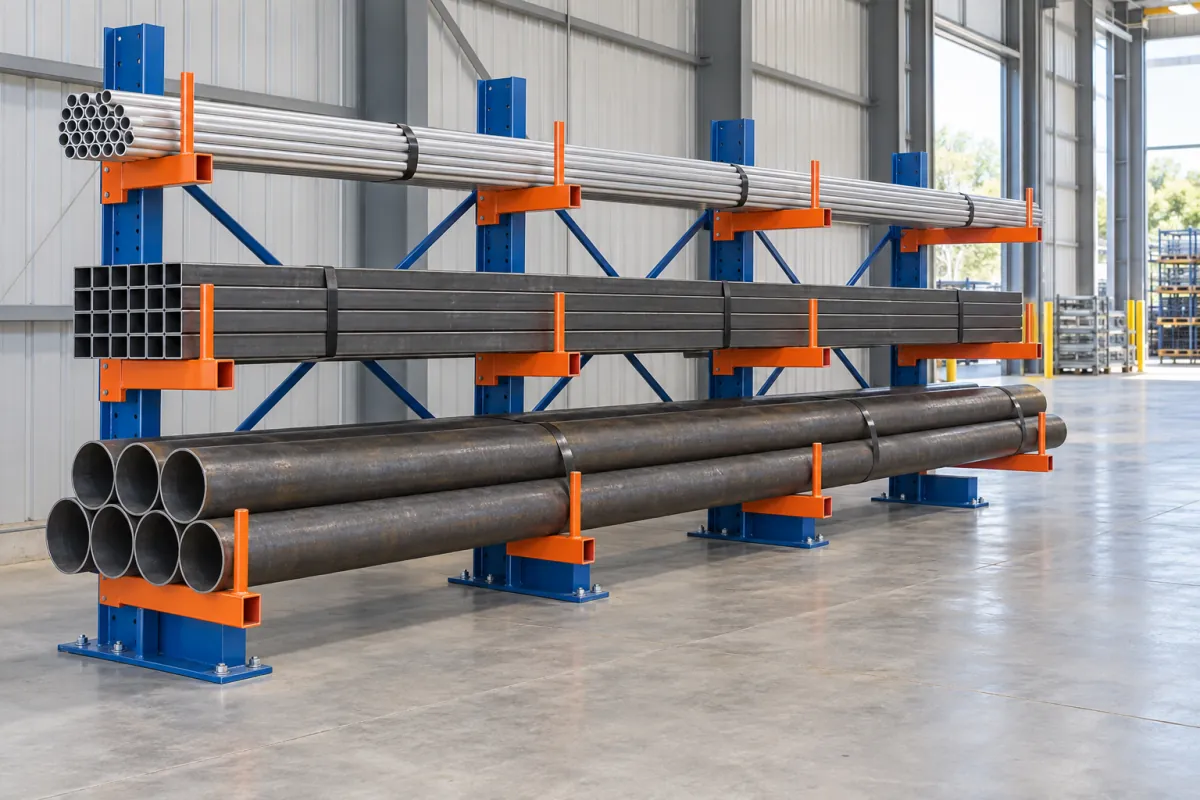
Store heavier material low. Heavier pipe and tubing should sit on lower arm levels, with lighter material higher up. This keeps the system’s center of gravity stable and reduces strain on the upper structure.
Use pipe stops or end caps. Round material rolls. Pipe stops and end caps on cantilever arms are a simple addition that prevents pipe from rolling off during loading, unloading, or even routine warehouse activity nearby.
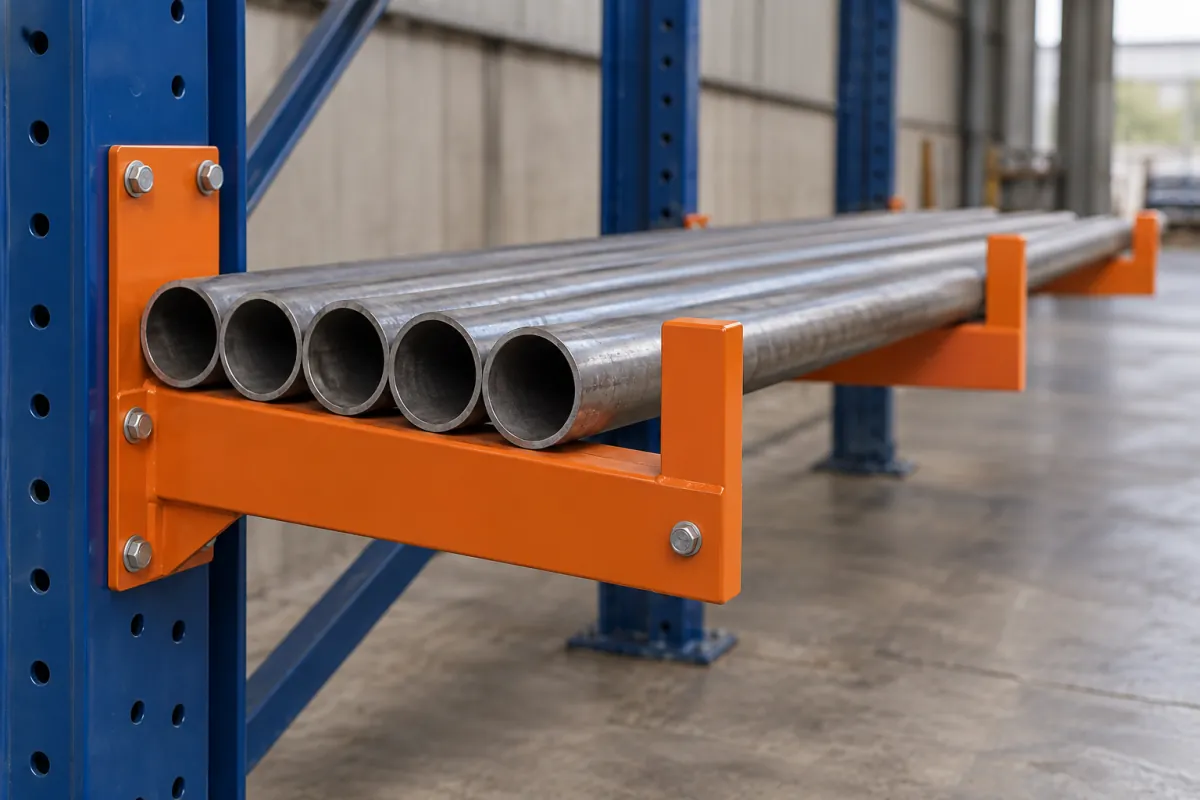
Don’t overhang beyond rated arm length. Pipe that extends significantly past the end of the arm creates an unsupported load and a real tipping or collapse risk. Keep material within the arm’s rated length.
Common Mistakes When Storing Pipe on Cantilever Racking
A few mistakes come up often enough to call out directly: mixing pipe sizes on the same arm level without separation, skipping pipe stops because a load “looks stable,” ignoring weight ratings for outdoor or coated material that weighs more than expected, and failing to inspect arms for bending after a forklift impact, since a bent arm changes the effective load rating even if it still looks functional.
Upgrade Your Pipe and Tubing Storage
If your warehouse is currently storing pipe or tubing on the floor or improvising with standard racking, moving to a properly sized cantilever system pays off quickly: safer storage, better organization, and floor space you get back immediately. For help choosing between light-duty and heavy-duty configurations, see our guide on how to choose the right cantilever rack.
Cantilever Racking Built for Your Inventory
Rocky Mountain Warehouse Solutions designs and installs cantilever racking systems for businesses storing pipe, tubing, lumber, and structural steel across the Mountain West. Our ANSI/RMI certified team sizes arms and columns to your actual material, not a generic template, and handles everything from design through installation.
Get a free warehouse layout consultation or contact our team to design a cantilever system built around what you actually store.
Related reading: Cantilever Racking: How to Store Lumber, Pipe, and Steel Without Wasting Floor Space
Frequently Asked Questions
What type of racking is best for storing pipe and tubing? Cantilever racking is the standard solution for pipe and tubing storage, since its open-arm design supports long, cylindrical material of varying diameters without the obstruction of front vertical posts found on pallet racking.
How do I prevent pipe from rolling off a cantilever rack? Pipe stops or end caps installed on the cantilever arms keep round material in place during loading, unloading, and routine warehouse activity. Skipping this step is one of the most common and most avoidable safety mistakes.
Can one cantilever system store multiple pipe diameters? Yes, especially with adjustable arms that can be repositioned vertically along the column. This lets a single system handle a range of pipe sizes without needing separate racking for each diameter.
Does outdoor pipe storage need special cantilever racking? Yes. Outdoor cantilever systems need weather-resistant coatings and corrosion-resistant materials to hold up against the elements over time, especially in climates with significant seasonal temperature and moisture swings.