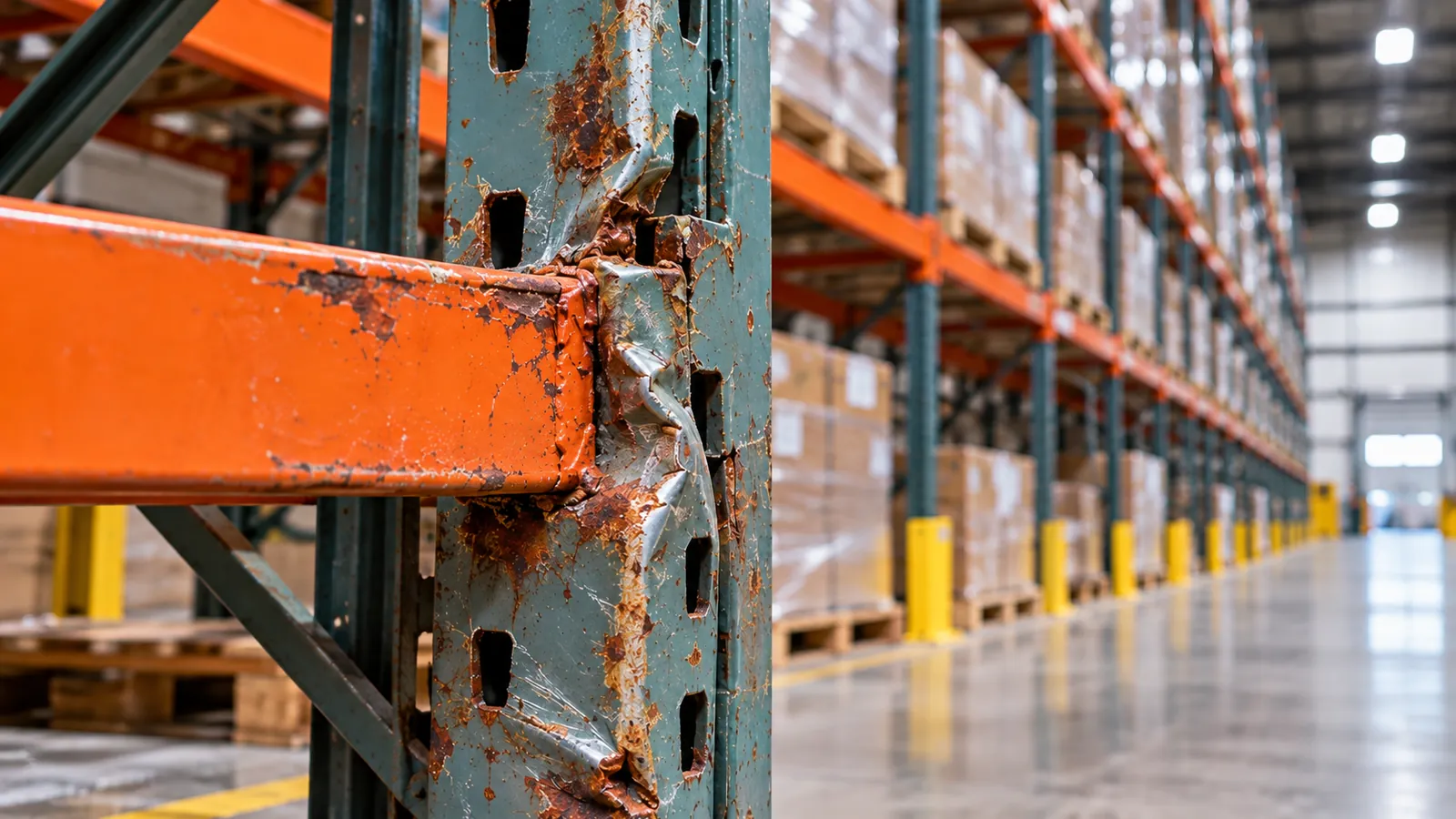
Your warehouse’s safety and efficiency depend on the condition of your pallet racking. When a racking system is damaged, outdated, or no longer matched to what you’re storing, it puts inventory, employees, and your operation at risk in ways that are easy to overlook until something goes wrong.
If you manage a warehouse or distribution facility, here’s how to recognize the warning signs that it’s time to replace your racking system instead of patching it again.
1. Visible Structural Damage
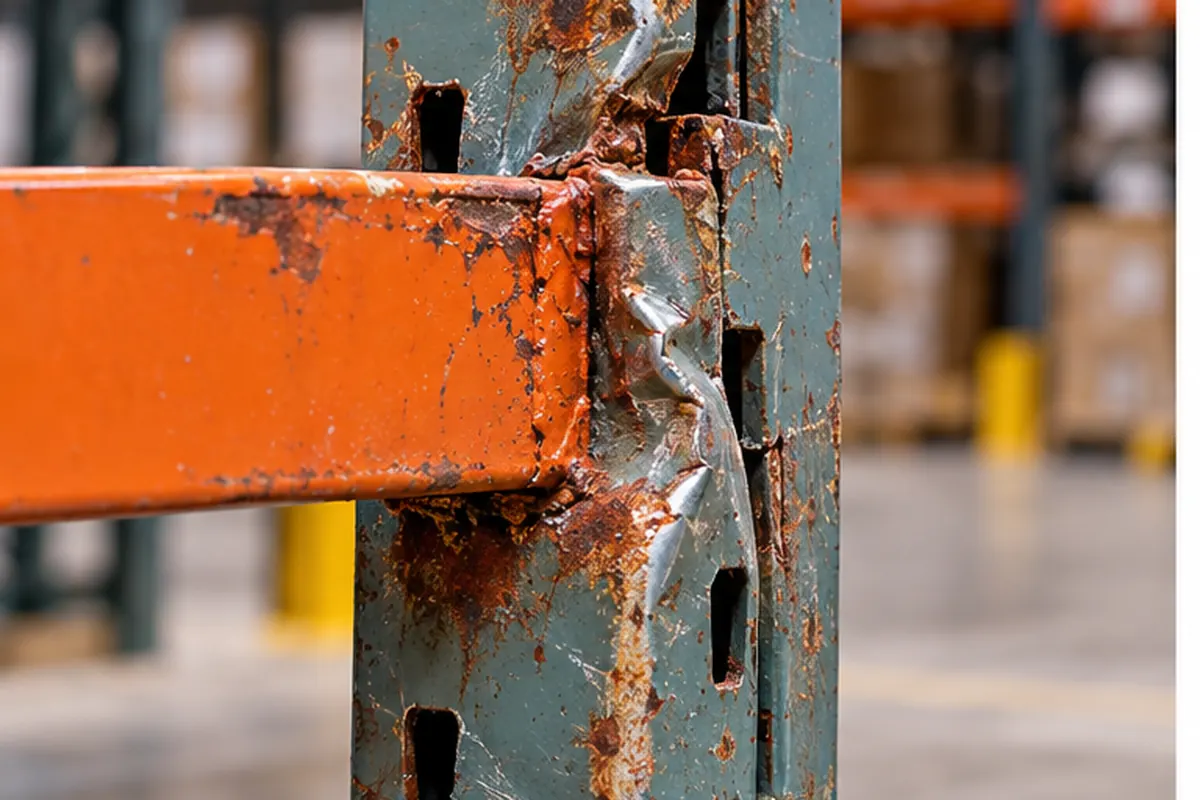
The most obvious sign is damage you can see. Pallet racking is durable, but it isn’t invincible. Watch for:
- Bent or twisted uprights and beams, usually from forklift impacts or long-term overloading
- Rust and corrosion, especially common in older racking or humid storage environments
- Cracked or broken welds, which can signal compromised structural integrity and a real risk of collapse
- Missing or damaged safety clips and locking pins
Any of these on their own is a reason to schedule an inspection. Multiple issues on the same run of racking usually means it’s time for replacement, not another repair.
2. Decreased Load Capacity
Racking that’s swaying, warping, or visibly straining under a normal load is telling you it can no longer hold what it used to. This often shows up when inventory weight has increased since the system was originally installed, or the racking has simply aged past its rated capacity.
Don’t push an aging system past its limits. It’s far cheaper to replace a rack than to deal with a collapse.
3. Outdated or Non-Compliant Racking
Racking can last decades, but codes and standards change. Older systems may not meet current seismic or fire-resistance requirements, may not be compatible with updated warehouse layouts or newer equipment, and can expose you to costly fines if they fall out of compliance with local building codes.
If your racking predates current seismic anchoring requirements or hasn’t been reviewed against today’s standards, it’s worth having someone check.
4. Frequent Repairs or Maintenance
Regular maintenance extends the life of a racking system, but there’s a tipping point. If the same components keep failing, repair costs are starting to exceed what replacement would cost, or downtime from maintenance is disrupting daily operations, it’s time to stop patching and start planning a replacement.
5. Changes in Business Needs or Warehouse Layout
Your business changes, and your racking should be able to keep up. If inventory volume has outgrown your current system, your picking process has shifted, or you’ve added automation like conveyors, it’s worth evaluating whether your existing racking still fits.
Modular systems make this easier going forward, letting you reconfigure sections as your layout evolves instead of starting over each time.
6. Safety Concerns or Near-Miss Incidents
Safety comes first in any warehouse. Old, worn, or damaged racking creates real risk, from collapses and tip-overs to dropped loads and inadequate seismic protection. If you’ve received an OSHA citation, failed a safety audit, or had a close call that could have gone worse, treat it as the clear signal it is.
What to Do If You’re Seeing These Signs
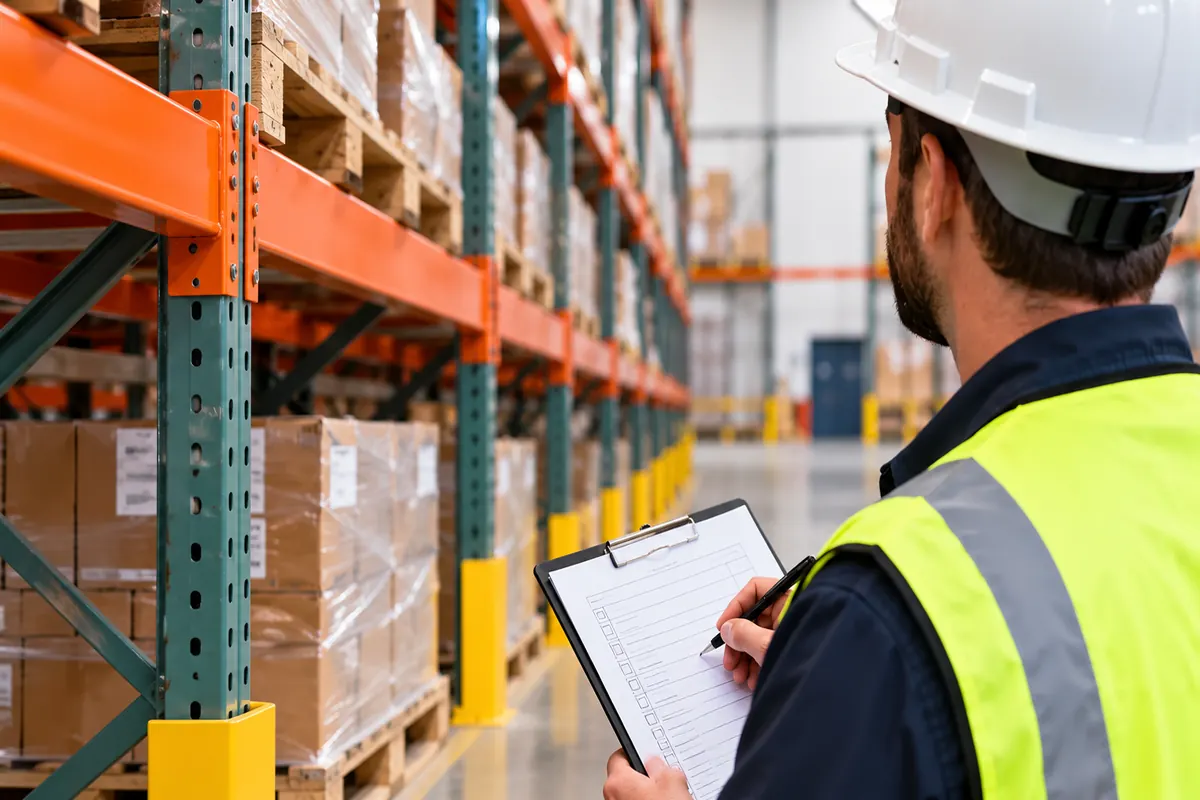
Start with a professional inspection or rack audit, such as our rack safety inspection service, to determine whether you’re looking at a partial repair or a full replacement. Document what you find for insurance, warranty, and compliance purposes. From there, partner with a team that can walk the floor with you and give you a straight answer, not just a sales pitch. If you’re trying to figure out which side of that call a specific section falls on, our guide on repair or replace a damaged pallet rack walks through the decision in more detail.
If budget is the main obstacle, replacement doesn’t have to mean paying full price for new. Inspected, reconditioned used pallet racking can be a cost-effective way to replace a damaged system without stretching your capital budget, as long as it’s sourced and installed correctly.
Replace with Confidence: Rocky Mountain Warehouse Solutions
Replacing aging pallet racking protects your people, your inventory, and your productivity, and it’s one of the highest-return upgrades a warehouse can make.
Rocky Mountain Warehouse Solutions has 80+ years of combined experience and has completed 500+ projects and installed 1,200+ racking systems across the Mountain West. Our ANSI/RMI certified crews handle inspection, removal, and pallet racking installation, whether you need a full system replacement, a partial upgrade, or a budget-friendly used racking option to bring a section back into compliance.
Get a free warehouse layout consultation or contact our team today to schedule an inspection and find out exactly where you stand.
Related reading: How to Inspect Used Pallet Racking Before You Buy and repair or replace a damaged pallet rack
Frequently Asked Questions
How often should pallet racking be inspected? Most safety standards recommend a formal rack inspection at least once a year, with informal visual checks happening more often, especially in high-traffic areas or after any forklift impact.
Can damaged pallet racking be repaired instead of replaced? Sometimes. Minor damage like a single bent beam or a missing safety clip can often be repaired. Structural damage like cracked welds, significantly bent uprights, or widespread corrosion usually means replacement is the safer and more cost-effective option.
What’s the average lifespan of pallet racking? With proper maintenance, pallet racking can last 20 years or more. Lifespan depends heavily on load conditions, environment, forklift traffic, and how quickly damage gets addressed when it happens.
Does OSHA require pallet racking inspections? OSHA doesn’t set a specific inspection interval, but it does hold employers responsible for maintaining safe storage conditions. Racking industry standards (RMI/ANSI MH16.1) recommend regular documented inspections, and failing to maintain compliant racking can result in citations.
Is used pallet racking a safe replacement option? Yes, as long as it’s been properly inspected before purchase and installed by a qualified crew. Used pallet racking can be a reliable, budget-friendly way to replace a damaged system, but it should go through the same inspection standards as new racking before it’s put back into service.