Pallet racking makes a warehouse run efficiently, but that benefit disappears the moment a rack is damaged. A damaged pallet rack puts both product and employees at risk, so addressing it quickly matters. The harder question is usually which fix is the right one: repair or replacement. The answer depends on the type of racking, what it stores, and how extensive the damage actually is.
If your rack is already damaged and you need to know what to do right now, our guide on how to address pallet rack damage walks through the immediate response steps. This article focuses on the decision that usually comes next: repair or replace.
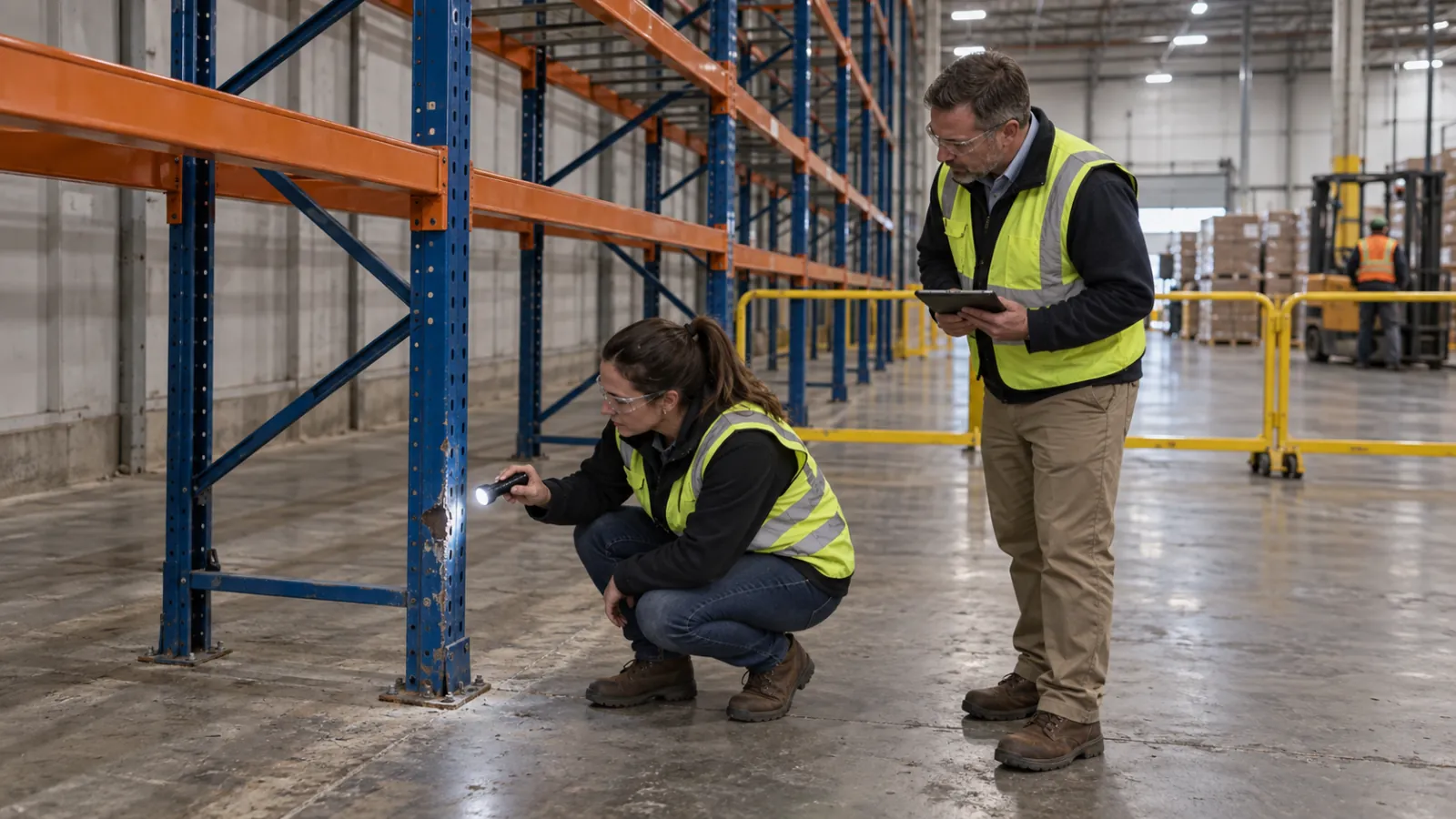
Step 1: Identify the Type and Extent of the Damage
Before deciding anything, you need an accurate picture of what you are dealing with. Common signs of pallet rack damage include:
- Rust or corrosion
- Cracking
- Bent or dented uprights
- Unanchored or loose baseplates
- Sagging beams
- Creaking or squeaking under load
- Misalignment between rack sections
- Visible tilting
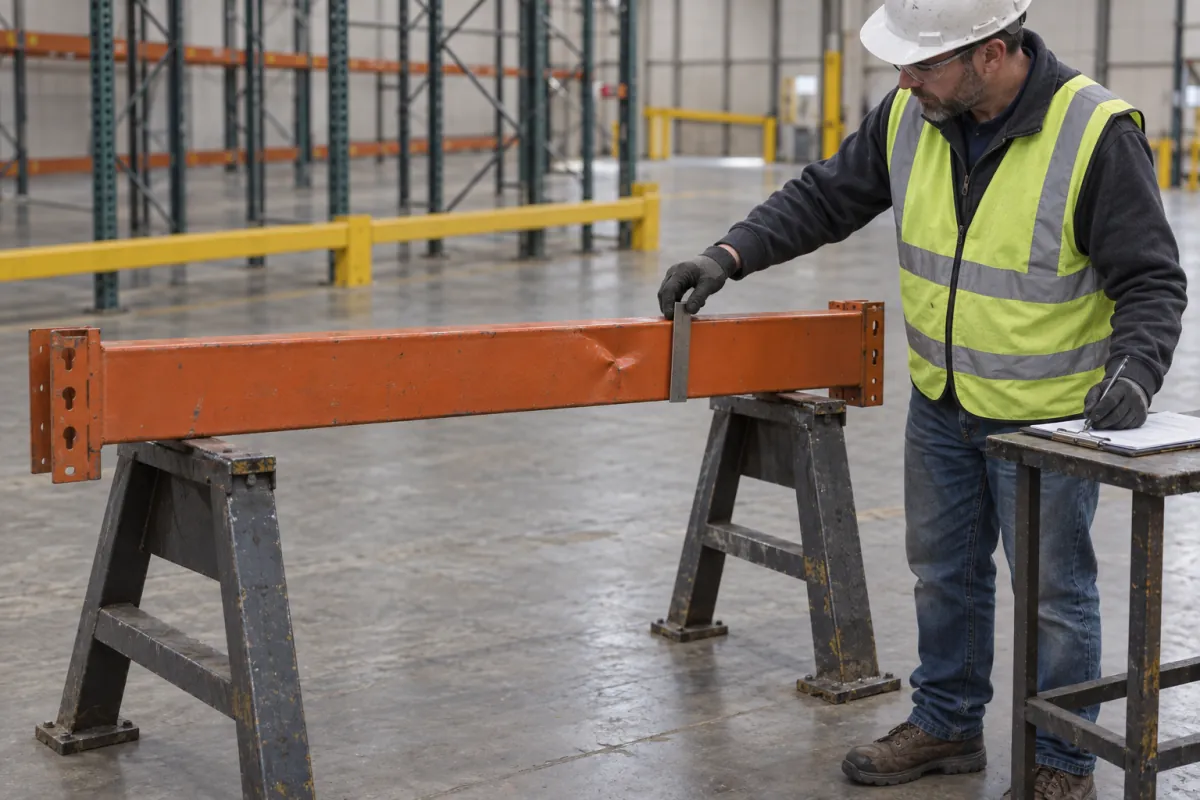
Rust, minor creaking, or slight misalignment can often be addressed with replacement parts. Bent uprights, sagging beams, or anything affecting the rack’s structural integrity is a different conversation entirely.
When Repair Is the Right Call
Repair tends to make sense when the damage is minor, isolated, and does not compromise the rack’s structural integrity. Situations where repair is often the better choice include:
- The damage is limited to a single component that a repair kit can address
- The affected section is low to the ground and not load-bearing for the levels above it
- The racking system is relatively new and otherwise in good condition
- Downtime or shipping delays for full replacement would seriously disrupt operations
A professional repair, done correctly, can restore a damaged section to safe working condition without the cost or downtime of a full replacement.
When Replacement Is the Right Call
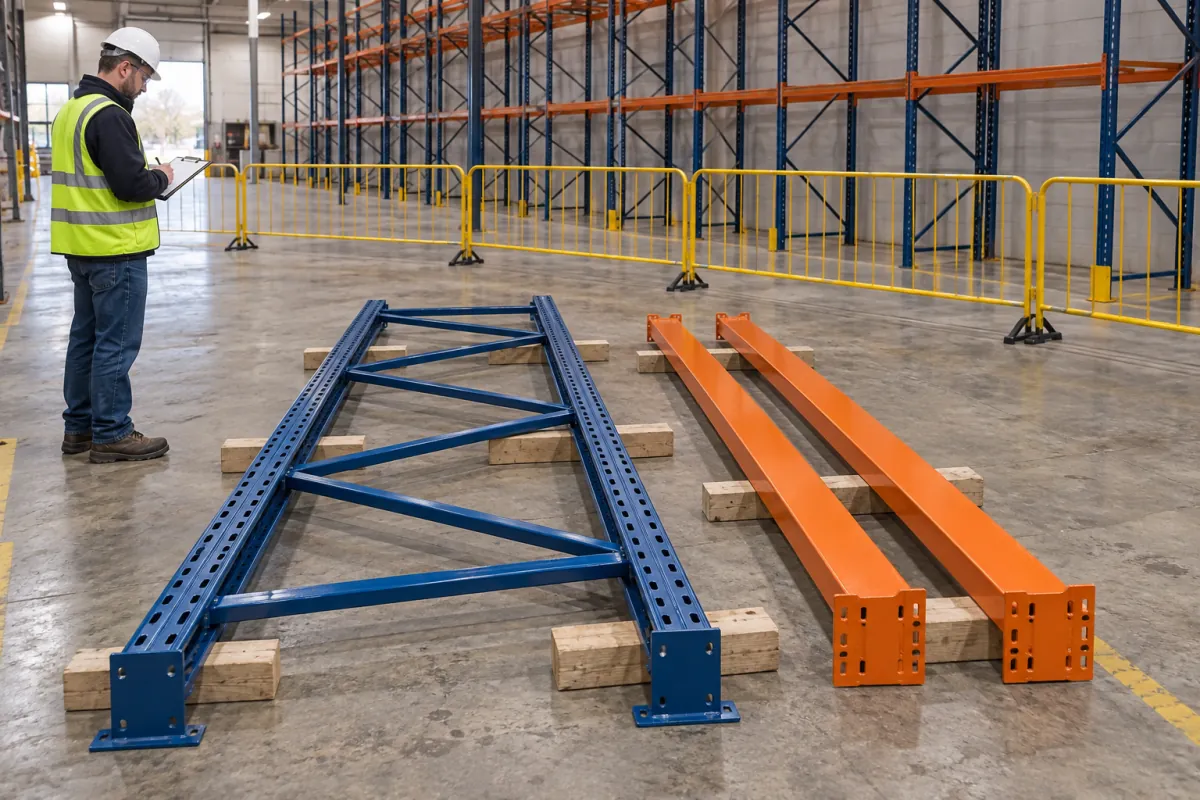
Replacement is the safer choice whenever there is meaningful doubt about whether a repair will fully restore structural integrity. Situations that typically call for replacement include:
- The damage affects a load-bearing upright, frame, or multiple connected components
- Corrosion or rust has progressed beyond a repairable surface issue
- The racking sees frequent product rotation or heavy day-to-day use, such as drive-in systems
- The system is already near the end of its expected service life
- You are relocating to a new facility and would need to reinstall anyway
If you are seeing multiple warning signs across your racking rather than one isolated issue, it may be a broader replacement decision rather than a repair job. Our guide on signs it’s time to replace your pallet racking covers those broader indicators in more detail.
A Simple Way to Decide
As a general framework:
- If the damage is isolated, low-impact, and the rack is otherwise sound, repair is usually reasonable.
- If the damage affects structural components, is widespread, or the rack is aging and heavily used, replacement is usually the safer and more cost-effective path.
- If you are unsure which category your situation falls into, treat it as a replacement question until a professional assessment says otherwise.
Cost is part of this decision, but it should never override safety. When the cost of repair approaches or exceeds the cost of replacement, or when there is any doubt about whether a repair fully resolves a structural issue, replacement is almost always the more responsible choice.
Get a Professional Assessment Before You Decide
Damaged racking is not a place to guess. A professional assessment, such as our rack safety inspection service, gives you a clear, documented picture of the extent of the damage and a recommendation that fits your budget, timeline, and safety requirements. Get a free warehouse layout consultation or contact our team and we will help you determine the right path forward.
Related reading: How to address pallet rack damage, signs it’s time to replace your pallet racking, and our rack repair service
Frequently Asked Questions
How do I know if a damaged pallet rack can be repaired? It depends on whether the damage is isolated and non-structural. Rust, minor misalignment, or damage to a single low-impact component can often be repaired. Bent uprights or damage affecting load-bearing components usually calls for replacement.
Is it cheaper to repair or replace a damaged pallet rack? Repair is often less expensive upfront for minor, isolated damage. But when repair cost approaches replacement cost, or when structural integrity is in question, replacement is typically the more cost-effective and safer long-term choice.
Can I keep using a pallet rack while it’s damaged? No. A damaged rack should be unloaded and taken out of service until it has been assessed and either repaired or replaced. Continuing to load a compromised rack significantly increases the risk of collapse.
Who should assess whether a pallet rack needs repair or replacement? A qualified racking professional should assess any structural damage. They can evaluate the extent of the damage and recommend whether repair or replacement is the safer and more practical option.