

Important note before you read further: the figures in this guide are general, illustrative industry ranges meant to help you understand how load capacity is calculated. They are not a substitute for your rack manufacturer’s documented load rating, and no rack should be loaded based on figures from this article alone. Always confirm your specific system’s certified capacity before loading it.
How much weight can your pallet racking actually hold? It’s a question every warehouse manager should be able to answer with confidence, not a guess. Overloading racking can lead to collapses, damaged inventory, and expensive repairs, while understating your needs can leave you buying more racking than necessary. This guide walks through how to actually calculate the load capacity your warehouse needs.
If you’re looking for typical beam capacity ranges by size, our weight capacity guide by beam size covers that in more detail. This guide focuses on the calculation process itself. New to pallet racking generally? Our complete guide to pallet racking covers the basics of components and types first.
Why Getting This Right Matters
Knowing your racking’s actual weight limit isn’t just a technical detail, it’s central to keeping your warehouse safe and compliant. Overloading racking increases the risk of collapse and puts employees at serious risk of injury, while damaged inventory and equipment add up quickly in repair and replacement costs. Understanding and respecting load limits also supports OSHA compliance and general warehouse safety standards.
Step 1: Understand Per-Level vs. Per-Bay Capacity
One of the most commonly misunderstood parts of load capacity is the difference between “per level” and “per bay” limits. Per level refers to how much weight a single shelf can safely hold. Per bay refers to the total weight the entire vertical section, all levels combined, can safely support. A system can have plenty of capacity at each individual level and still have a lower overall limit for the full bay, so you need both numbers, not just one.
Step 2: Know Which Rack Type You’re Working With
Not all racking types carry the same capacity profile. As general, illustrative ranges only:
- Selective racking typically falls somewhere in the range of 2,000 to 6,000 lbs per shelf level, depending on beam length, width, and material strength.
- Drive-in racking, designed for high-density storage of similar items, can often support considerably more per bay, but requires careful, even loading.
- Cantilever racking, used for long or oddly shaped items like pipe or lumber, is typically rated per arm rather than per level, with capacity depending on the number and length of arms.
These ranges exist only to illustrate how much capacity can vary by rack type. Your actual number always comes from the manufacturer’s documentation for your specific system.
Step 3: Account for Beam Capacity vs. Frame Capacity
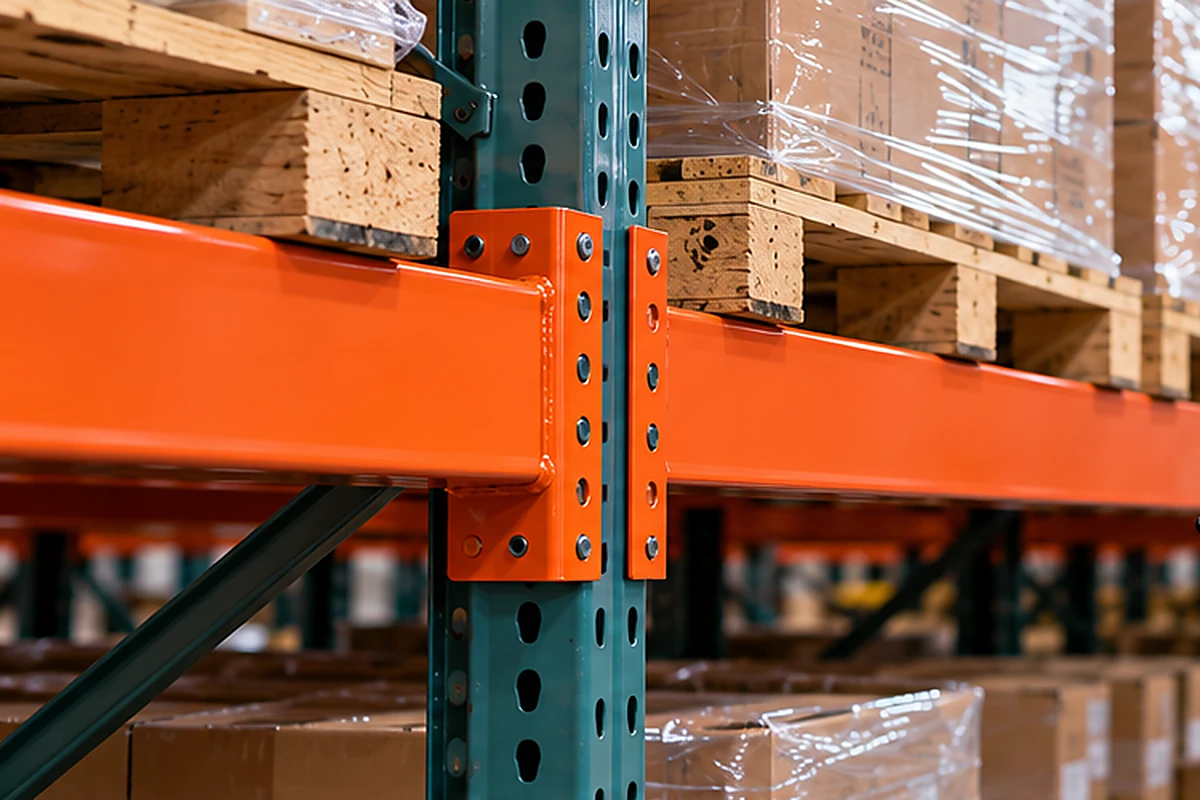
Every pallet rack has two separate strength ratings that both matter. Beams, the horizontal pieces holding pallets, have a specific weight limit per level. Frames, the vertical uprights, support the total weight of the entire structure. Even if your beams are rated for a heavy load, your frames might have a lower overall limit for the full bay. Both numbers need to be checked, not just the one that looks more favorable.
Step 4: Factor in Rack Dimensions and Load Distribution
Height, width, and depth all affect how much weight a rack can safely handle. Taller racks often need additional support, and wider beams need to be rated appropriately to avoid sagging. Just as important is how weight is distributed: concentrating heavy loads on one side of a bay, or in a single spot, can strain the structure well below its rated capacity even if the total weight seems within range. The safest approach spreads weight evenly and places heavier items on lower levels.

Step 5: Use the Manufacturer’s Load Chart, Not a Guess
The only reliable way to confirm your load capacity is through the manufacturer’s specifications or load chart for your exact system. These provide tested weight limits specific to your rack’s design, materials, and configuration. Don’t estimate based on how a rack looks or how similar systems have performed elsewhere.
Warning Signs You’ve Miscalculated
If your racking is regularly showing signs of strain, misalignment, product shifting, or bowing beams, it may mean your actual load exceeds what the system was calculated to hold. Our guide on signs your pallet racking is overloaded covers what to watch for, and a regular inspection program is the best way to catch a miscalculation before it becomes a safety issue.
Get a Professional Load Assessment
For larger warehouses or specialized inventory, a professional assessment, such as our rack safety inspection service, gives you a documented, verified answer instead of an estimate. Get a free warehouse layout consultation or contact our team and we’ll help you confirm the right capacity for your space.
Related reading: Pallet Racking Weight Capacity Guide by Beam Size, The Importance of Regular Pallet Rack Inspections, and What Is Pallet Racking? A Complete Guide
Frequently Asked Questions
What’s the difference between per-level and per-bay pallet rack capacity? Per-level capacity is how much weight a single shelf can hold. Per-bay capacity is the total weight the entire vertical section can safely support, and it can be lower than the sum of individual level ratings would suggest.
How do I calculate the load capacity my warehouse actually needs? Start with your average and heaviest pallet weights, the number of levels you need, and how loads will be distributed, then compare that against the manufacturer’s documented rating for the specific rack type and configuration you’re considering.
Can I estimate pallet rack capacity without the manufacturer’s specs? No. General industry ranges can help you understand how capacity varies by rack type, but the only reliable number is the certified capacity listed on your specific system’s load tag or engineering documentation.
What happens if I exceed my pallet rack’s calculated load capacity? Exceeding rated capacity increases the risk of bent or failed components and potential collapse. If you suspect a rack is overloaded, it should be taken out of service and inspected before it’s loaded again.