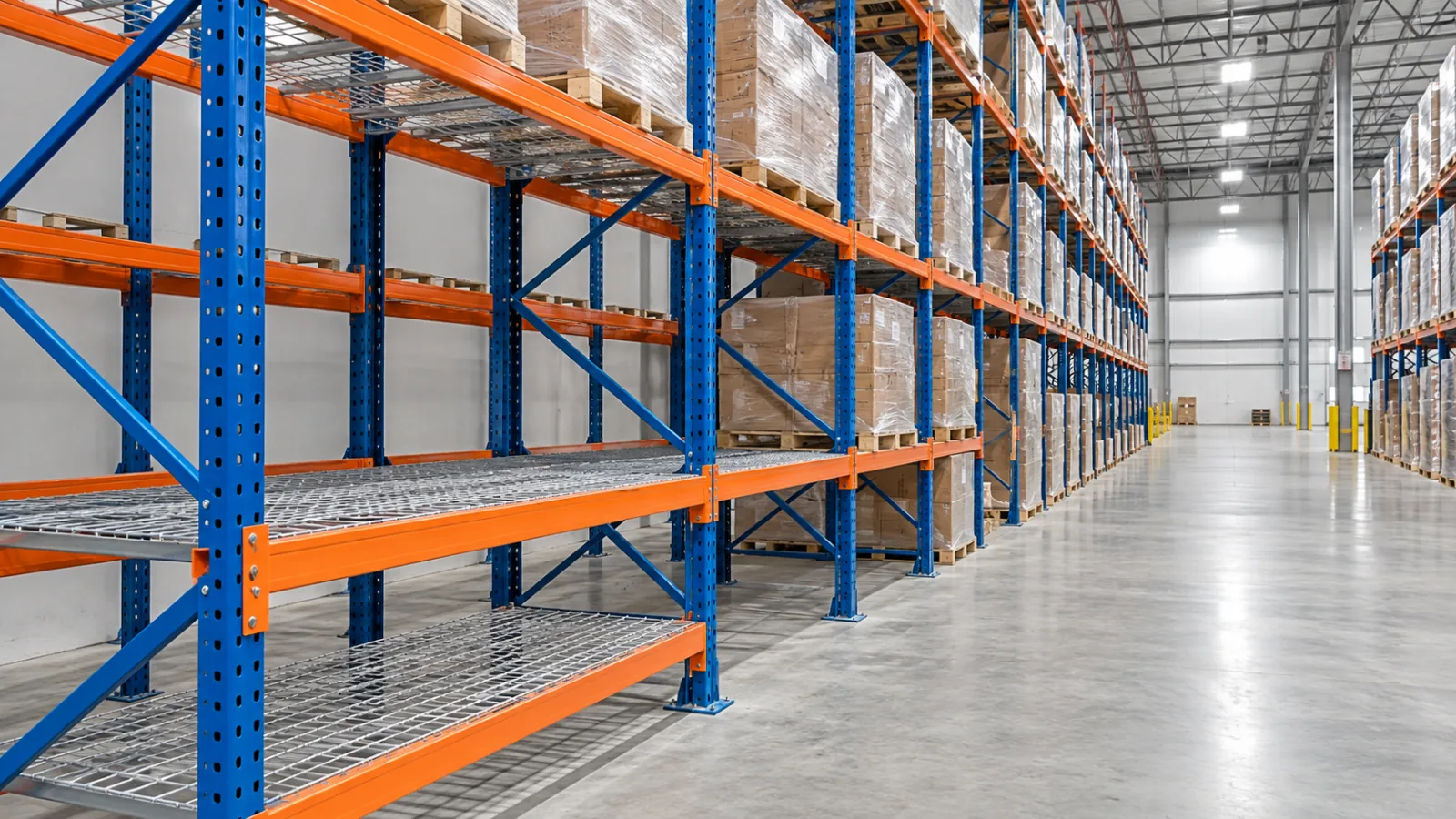
Pallet racking is a storage system built from vertical frames and horizontal beams that lets warehouses store palletized inventory vertically instead of on the floor. It’s the foundation of most modern warehouse storage, and understanding how it works makes it much easier to choose the right system for your space. This guide covers the core components, the main benefits, and the most common types of pallet racking in use today. For a broader look at warehouse storage solutions beyond racking alone, see our complete guide to warehouse storage.
The Core Components of a Pallet Racking System
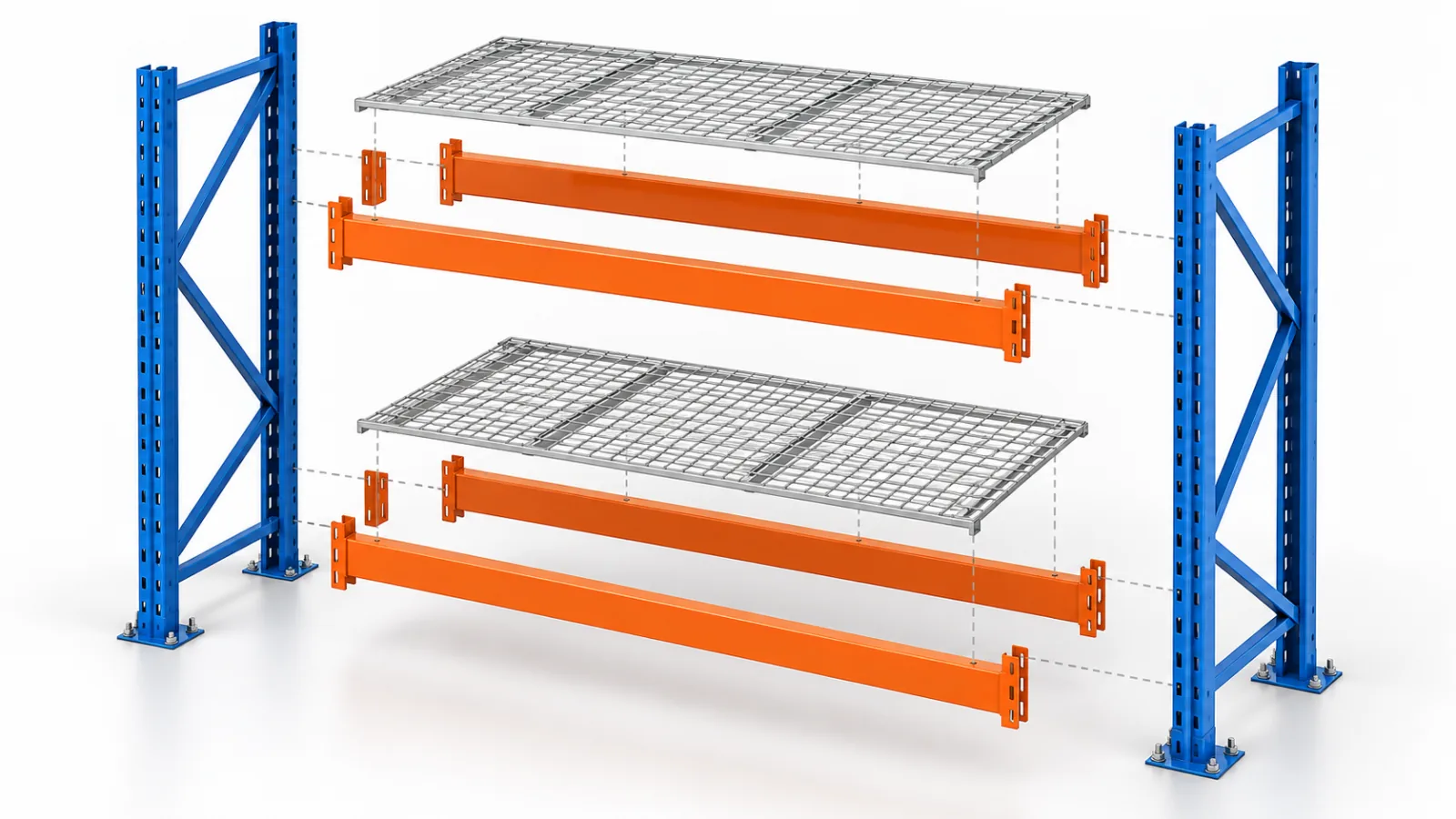
Uprights (frames). Uprights are the vertical columns that support the entire structure. They come in a range of heights and depths depending on warehouse layout and storage needs, and they’re what allow a system to safely reach further into a building’s vertical space.
Beams. Beams connect horizontally between uprights and create the levels where pallets sit. Beam length and face height determine how much weight each level can support. See our guide on how to calculate your pallet rack’s actual weight limit if you need to confirm a specific configuration’s capacity.
Wire decking. Wire decks sit on top of the beams to support pallets and add stability. They also improve airflow, visibility, and fire safety compared to open beam levels.
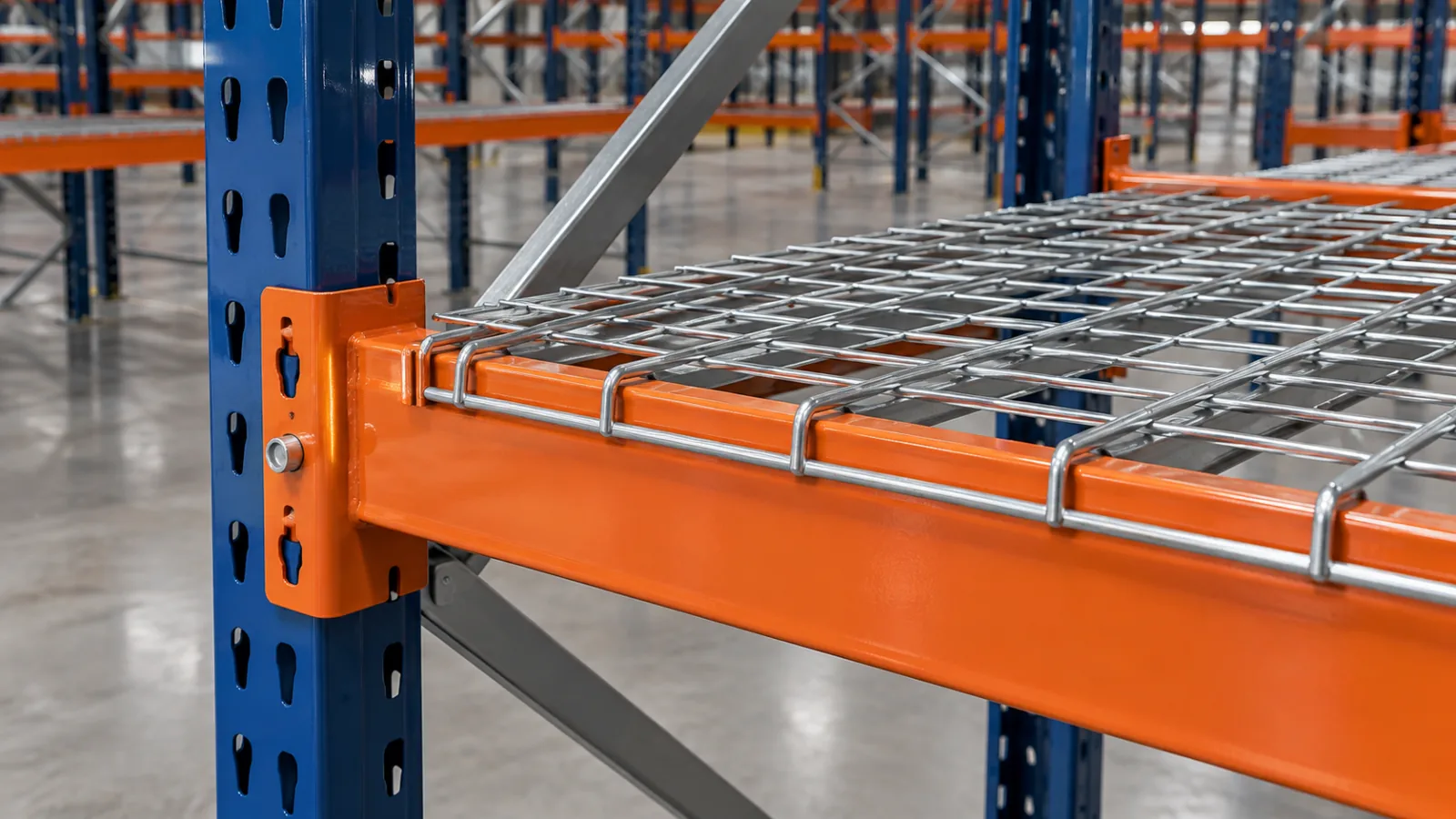
Together, these three components form a system capable of handling heavy inventory loads while keeping storage organized and accessible.
Benefits of Pallet Racking
Maximizes vertical storage. Many warehouses only use floor-level storage, leaving significant overhead space unused. Installing racking lets a facility use that vertical space, often multiplying usable storage capacity without expanding the building’s footprint.
Improves organization. A well-designed racking layout keeps inventory in clearly defined rows and levels, making it easier for employees to locate products and move materials efficiently.
Increases workplace safety. Stacking pallets directly on the floor creates unstable piles and cluttered aisles. Properly installed racking is engineered to hold heavy loads safely while keeping aisles clear for forklifts and foot traffic. Our guide on how pallet racking improves warehouse safety covers this benefit in more depth.
Supports better inventory management. Organized pallet locations make it easier to track products, manage stock levels, and improve picking accuracy, especially for operations with high product turnover.
Common Types of Pallet Racking
Different warehouses need different racking configurations depending on inventory type and workflow. The most common types include:
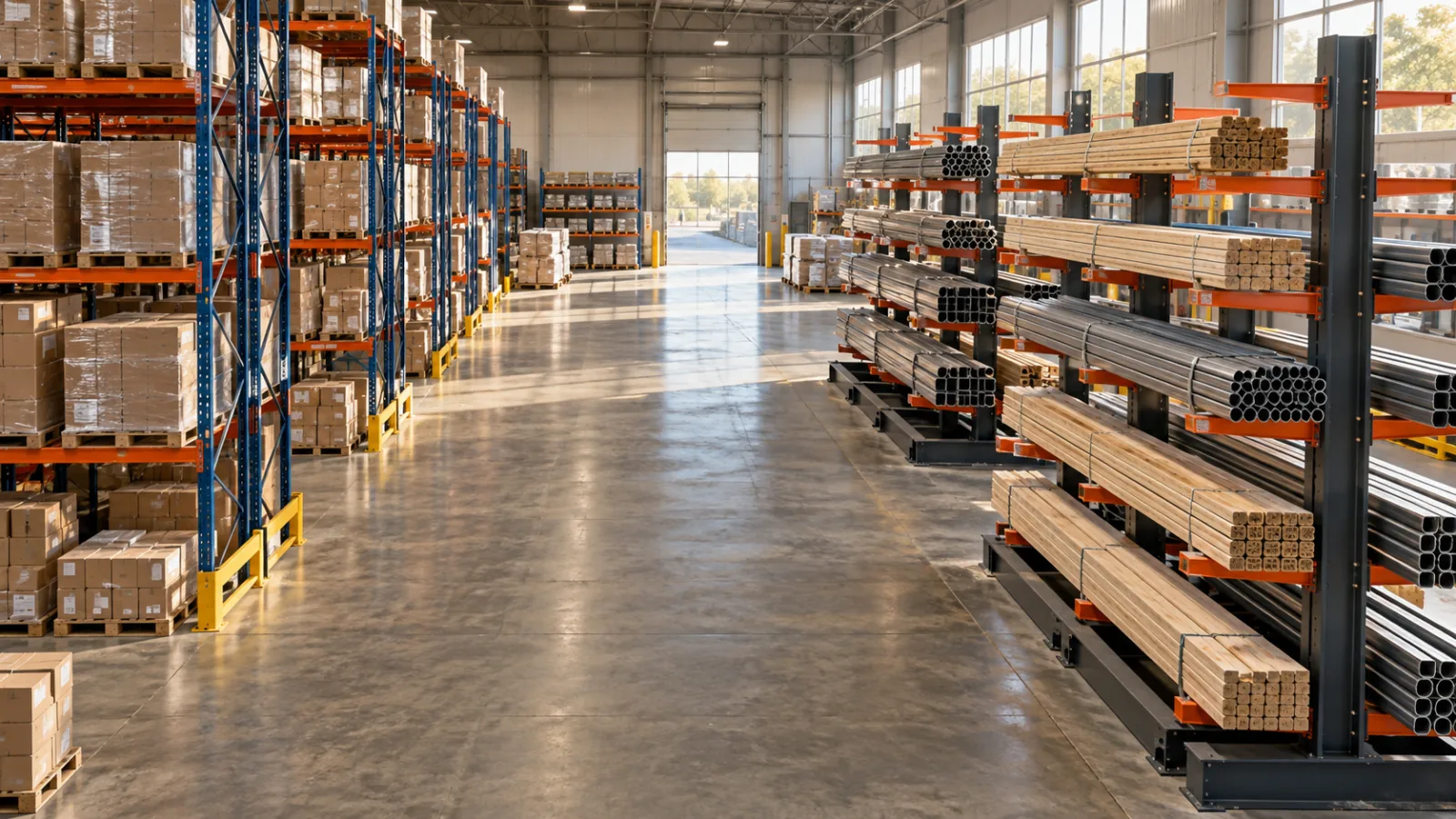
Selective pallet racking. The most widely used system, offering direct access to every pallet position. It works well for most general-purpose warehouses and distribution centers.
Drive-in racking. A high-density system that lets forklifts drive directly into the rack structure to store multiple pallets deep, ideal for large quantities of the same SKU. See our comparison of drive-in vs. drive-through racking for the differences between these high-density formats.
Push-back racking. A space-efficient system where pallets sit on carts that slide back automatically as new pallets are loaded.
Cantilever racking. Designed for long or bulky materials like lumber, pipe, or steel that don’t fit standard pallet dimensions. Our guide on choosing the right cantilever rack covers how to size and configure this type.
Choosing the right system depends on your warehouse layout, the type of inventory you store, and how quickly you need to access individual pallets. Our pallet racking buyer’s guide walks through that decision in more depth.
Professional Installation Matters
Proper installation is critical to both the safety and the efficiency of any pallet racking system. Warehouse layout, forklift access, load capacities, and local building codes all need to be factored in during installation, not adjusted for afterward. Once a system is installed, keeping it safe is an ongoing job; see our guide on the importance of regular pallet rack inspections for how to build that into your operations.
Get Help Choosing the Right System
If your warehouse is running out of storage space, or your current setup isn’t working as efficiently as it should, the right pallet racking system can make a significant difference. Get a free warehouse layout consultation or contact our team to talk through what would work best for your space.
Related reading: Pallet racking buyer’s guide: choosing a system that fits your inventory and how pallet racking improves warehouse safety
Frequently Asked Questions
What is pallet racking? Pallet racking is a storage system of vertical frames and horizontal beams that lets warehouses store palletized inventory vertically instead of on the floor, increasing usable storage capacity.
What are the main types of pallet racking? The most common types are selective pallet racking, drive-in racking, push-back racking, and cantilever racking, each suited to different inventory types and access needs.
What are the main components of a pallet racking system? A pallet racking system is built from vertical uprights, horizontal beams, and wire decking that sits on top of the beams to support pallets and improve safety and airflow.
How do I choose the right type of pallet racking for my warehouse? It depends on your inventory mix, how often you need to access individual pallets, and your available floor and vertical space. Our buyer’s guide walks through matching a system to your specific needs.