Every pallet racking system has a load capacity, a documented limit on how much weight it can safely hold. Racking only works as intended when that limit is respected. Exceeding it puts employees at risk, damages inventory, and shortens the life of the racking system itself. This guide covers the warning signs that a system is being pushed past what it was built to hold, and what to do about it.
What Determines a Rack’s Load Capacity?
Before you can spot overloading, it helps to understand where load capacity comes from. Most of it is determined by beam capacity, the maximum weight a level can hold between two uprights, along with the strength of the upright frames and the load-bearing capacity of the floor itself. The only reliable source for these numbers is the manufacturer’s documented load rating for your specific system. For a closer look at how beam size and configuration affect capacity, see our weight capacity guide by beam size, and for help calculating what your specific warehouse needs, see how to calculate your pallet rack load capacity.
Difficulty Aligning or Leveling Racks
One of the earliest signs of an overloaded system is difficulty keeping racks aligned or level. Excessive weight can cause anchor points to shift or beams to bend slightly, making it harder to keep uprights and beams properly aligned. Left unaddressed, this kind of stress compounds over time and can significantly shorten the life of the racking system.
Twisting, Bowing, or Cracked Uprights
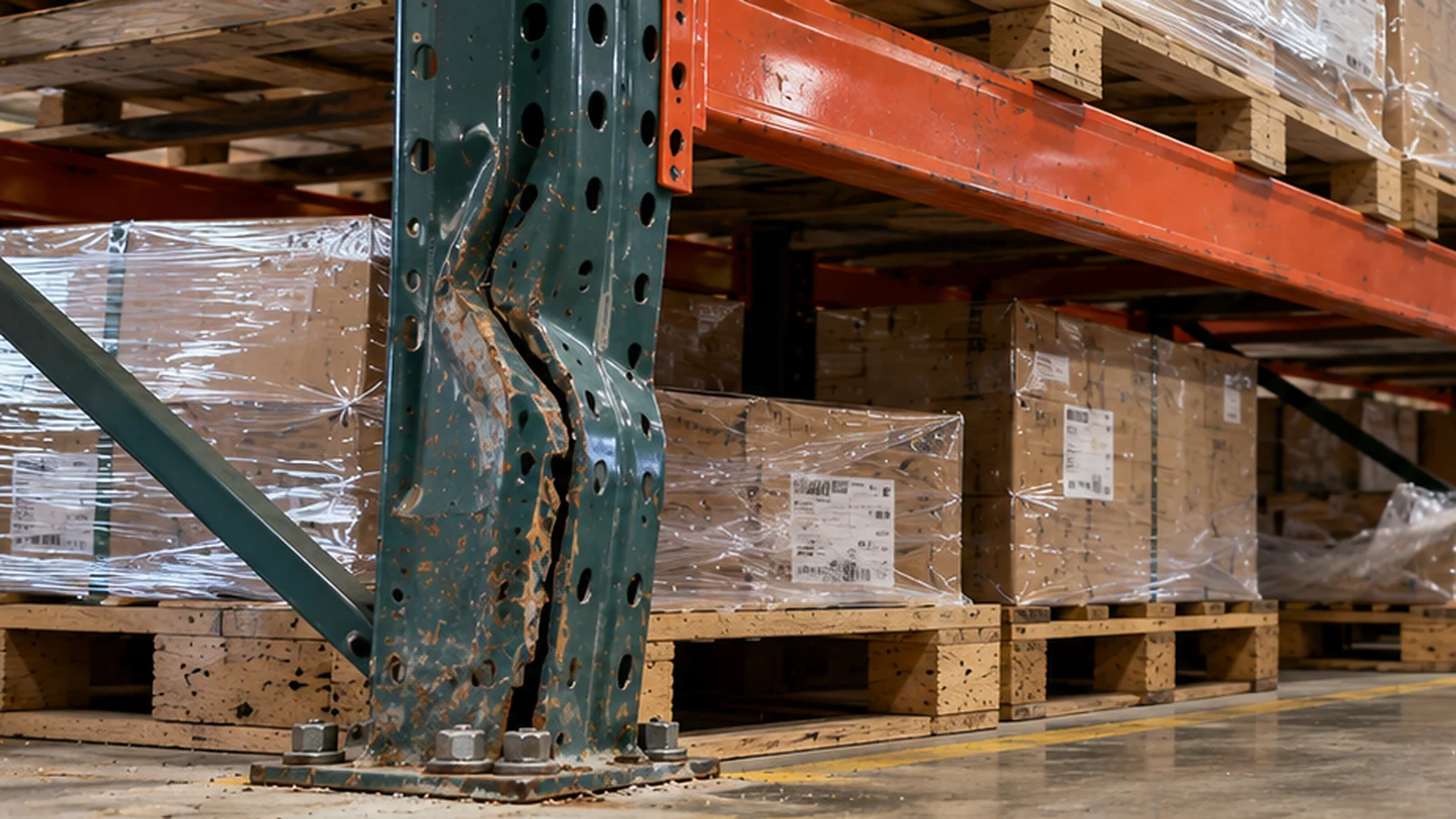
Uprights are what keep the entire structure standing. When a system is overloaded, uprights can twist, bow, or crack under the strain, especially with repeated stress over time. Any visible deformation in an upright is a serious red flag and should take that section out of service until it is inspected.
Frequent Product Shifting
If inventory is regularly shifting on the racks, especially when nearby racks are loaded or unloaded, it can be a sign that the system is carrying more weight than it is rated for. Unstable, overloaded racking allows product to roll or shift more easily, which increases the risk of items falling, getting damaged, or injuring someone nearby.

Sagging or Deflecting Beams
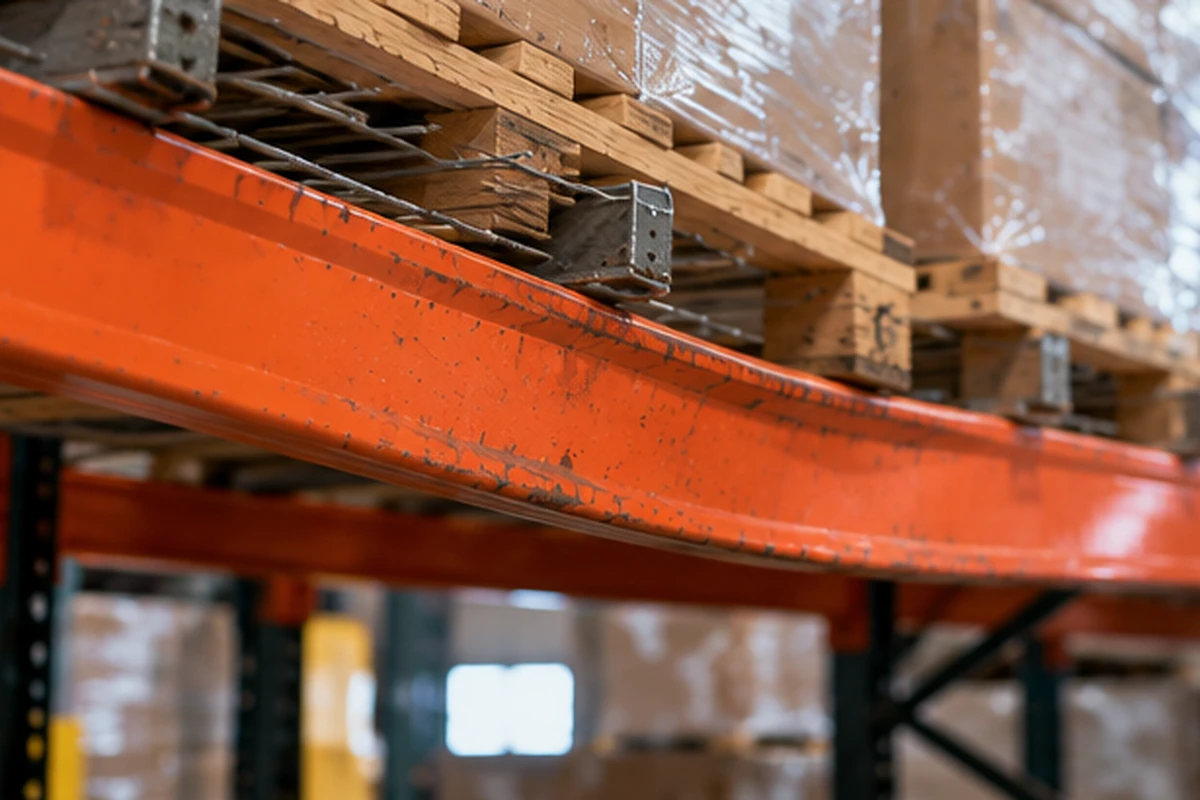
Beams are designed to flex slightly under load, but visible sagging or a beam that has taken on a permanent bow is a sign the level is carrying more weight than it should. This is one of the more serious warning signs, since a beam that has already deformed has less remaining strength than a beam that hasn’t.
Why Overloading Is Dangerous
Warehouses are busy environments, and keeping them safe protects both employees and the long-term health of the business. Overloaded racking significantly increases the risk of a partial or total collapse, which can injure workers and damage large amounts of inventory at once. Beyond the immediate safety risk, chronic overloading shortens the usable life of a racking system, often forcing an earlier and more expensive replacement than would otherwise be necessary.
What to Do If You Suspect Overloading
If you notice any of these signs, the first step is to stop adding weight to the affected section and have it inspected before it goes back into service. A professional assessment, such as our rack safety inspection service, can confirm whether the section needs repair, replacement, or simply a redistribution of the current load. For a look at the problems inspections most often turn up, see our guide to common pallet racking safety violations. For a broader look at what causes racking damage in the first place, see our guide to common causes of pallet rack failure. Catching overloading early is much easier with a consistent inspection routine already in place; see our guide on the importance of regular pallet rack inspections for how to build one.
Get a free warehouse layout consultation or contact our team if you want a professional opinion on whether your current racking is operating within safe limits.
Related reading: Pallet Racking Weight Capacity Guide by Beam Size, 8 Common Causes of Pallet Rack Failure, and The Importance of Regular Pallet Rack Inspections
Frequently Asked Questions
What are the first signs that a pallet rack is overloaded? Common early signs include difficulty keeping racks aligned or level, twisting or bowing uprights, frequent product shifting, and beams that sag or deflect more than usual.
Is it safe to keep using a pallet rack that shows signs of overloading? No. Any section showing signs of overloading should be taken out of service and inspected before it is loaded again. Continuing to use it increases the risk of collapse.
What causes a pallet rack to become overloaded? Overloading usually happens when actual inventory weight exceeds the system’s documented load rating, often due to inventory changes, uneven weight distribution, or not confirming capacity before storing heavier products.
How do I know the actual weight limit of my pallet racking? Check the manufacturer’s load tag or engineering documentation for your specific system. If those aren’t available, a professional assessment can help verify safe capacity.